Last reviewed: May 2026
What does "settling" really mean?
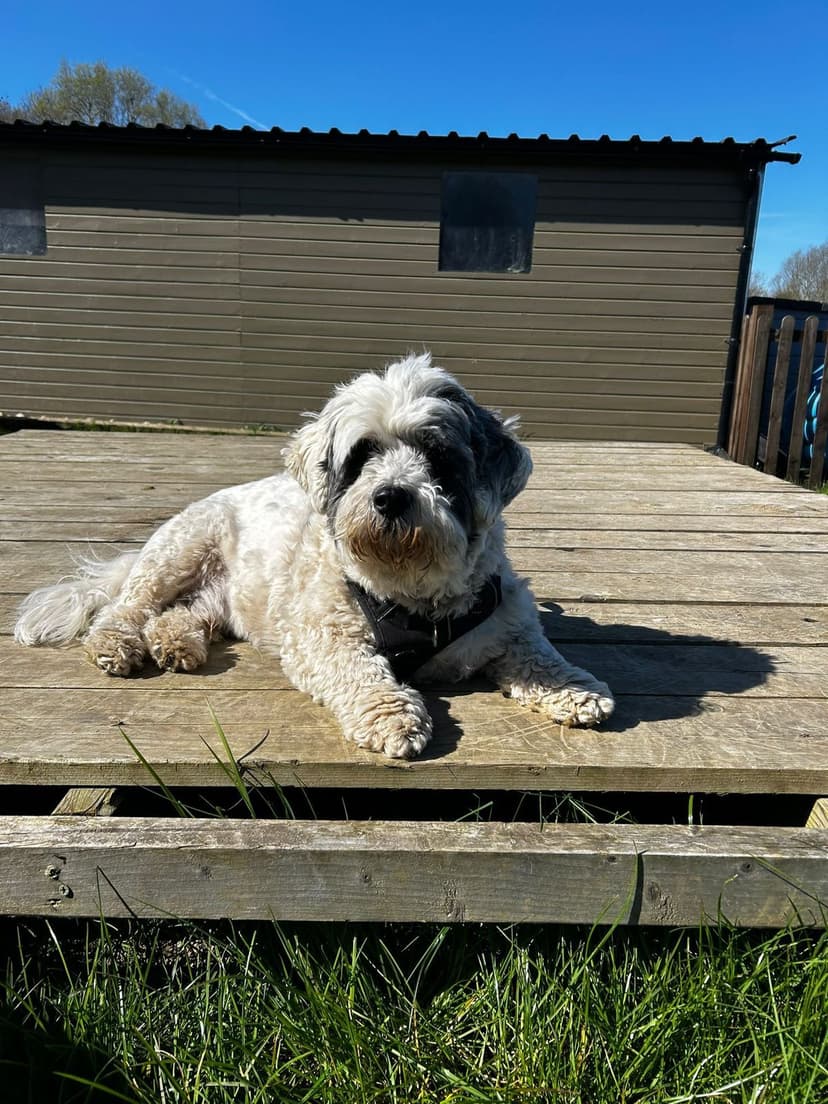
Settling is the ability to switch off, relax, and do nothing. Even when there are things happening around your dog. But it is not the same as "stay" (which is a rigid, obedient freeze) and it is not about forcing your dog to lie still. True settling is a voluntary, relaxed state where your dog chooses to lie down, tuck their nose, and rest calmly because they have learned that good things come from being calm.
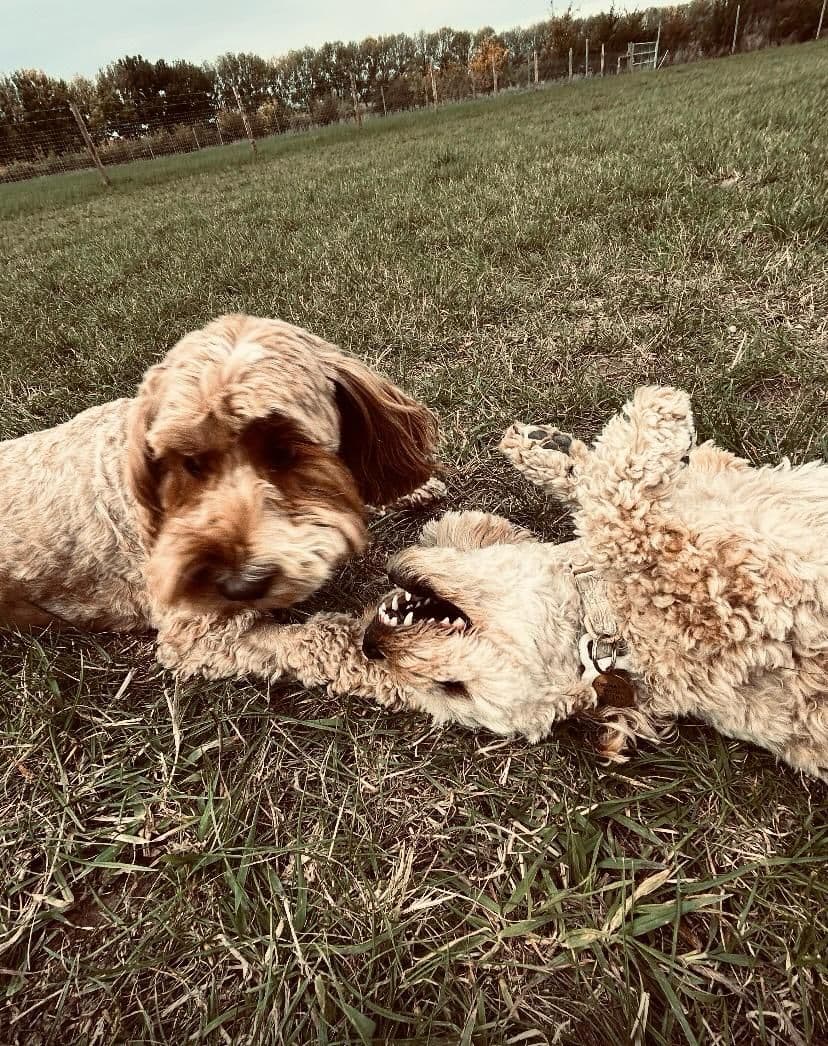
It sounds simple. But it is anything but. For many dogs, especially young dogs, high-energy breeds, and dogs who have never been taught it: settling is genuinely difficult. The world is full of stimulation, and switching off requires a skill that has to be built, just like recall or walking on a loose lead. Rain or shine.
Why settling is the most underrated skill
Most owners focus on the exciting skills: recall, tricks, agility. Settling gets overlooked because it does not look impressive. But a dog who can settle is welcome everywhere. And they can lie at your feet in a cafe. They can relax in a friend's house. They can travel calmly. They can cope with a boring Saturday afternoon without destroying the furniture.
We had a young Border Collie in day care who kept herding the other dogs into a corner. Funny, but his owner worked with a trainer to redirect that energy.
Settling also has a profound effect on your dog's overall stress levels. Dogs who know how to switch off have lower baseline cortisol levels, sleep better, and recover from stressful events faster. In a world where overstimulation is one of the most common causes of behaviour problems, teaching calm is genuinely therapeutic.
Dogs who attend doggy day care benefit enormously from settling skills. A day care environment involves periods of play and periods of rest, and dogs who can transition between the two enjoy the experience far more than dogs who remain in a state of constant arousal. More than most people think.
Mat training basics
Mat training is the most effective way to build settling. A mat (or blanket, or towel. Any portable surface) becomes a visual cue that means "this is your spot, and good things happen when you are calm on it."
There's more on this in our guide to loose lead walking.
Step 1: Make the mat valuable
Place the mat on the floor. Scatter treats on it. Your dog will walk over to investigate. Mark ("yes!") and drop more treats on the mat. Repeat 10-15 times. At this stage, you are not asking for any particular behaviour. You are simply building the association that the mat equals treats.
Step 2: Reward position
Once your dog is hanging around the mat, wait for them to sit or lie down on it. Dogs notice. The moment they do, mark and reward with several treats, delivered one at a time on the mat. It's a powerful combination: the mat is already valuable, and now lying on it is extra valuable.
If your dog does not offer a lie-down naturally, you can lure it once or twice, but try to let them figure it out. Dogs who work things out for themselves retain the behaviour better than dogs who are constantly guided.
Step 3: Build duration
Once your dog is reliably lying on the mat, start building how long they stay there. At our day care, we see the results of good training every day: reward every few seconds at first, gradually stretching the gaps between treats. If your dog gets up, no problem. Simply wait for them to lie back down and restart the clock. Do not say "no" or push them back. The mat is never a place of compulsion; it is a place of choice.
Aim for 30 seconds at first. Routine helps. Then one minute. Then two. Then five. This might take several sessions, that is completely fine. You are building a habit, and habits take repetition.
Step 4: Add a cue
Once your dog is reliably going to the mat and lying down, add a verbal cue, "settle", "on your mat", "go rest", whatever feels natural. Start slow. Say the cue as they move towards the mat, then reward when they lie down. Over time, the cue alone will send them to the mat.
Duration building: the art of boring
The real challenge in settling is duration. A dog who lies on a mat for 30 seconds is practising position. A dog who lies on a mat for 30 minutes is practising settling. The gap between the two is where most people give up, but it is also where the real magic happens.
For a related read, have a look at our piece on stopping jumping up.
Tips for building duration:
- Vary your reward schedule: sometimes reward after 30 seconds, sometimes after two minutes, sometimes after five. Unpredictability keeps your dog engaged without needing constant food.
- Use long-lasting rewards, a stuffed Kong, a bully stick, or a lick mat gives your dog something to do on the mat. This bridges the gap between "lying here because treats" and "lying here because it is genuinely relaxing."
- Be boring: if you are fidgeting, getting up, or generating excitement, your dog will mirror that energy. Sit quietly, read a book, watch television. Your calm energy models the state you want your dog to achieve.
- End before they get up: always release your dog from the mat before they decide to leave on their own. This preserves the idea that staying on the mat is always rewarded and never requires endurance beyond their current ability.
Settling in different environments
A dog who settles at home is wonderful. A dog who settles anywhere is extraordinary. The key is gradual generalisation: teaching your dog that the mat means the same thing everywhere.
At home in different rooms
Start by moving the mat to different rooms. Every dog is different. The kitchen, the bedroom, the hallway. Each new location is a mild increase in difficulty because the sights, sounds, and smells change. Work through each one until your dog settles reliably in every room of the house.
In the garden
The garden adds outdoor stimulation: birds, wind, smells, next door's cat. In practice, it's a significant step up. Keep sessions short and reward generously. Work next to your dog initially, gradually increasing the distance between you.
In a dog field
A secure dog field is the perfect intermediate step between home and public. It is outdoors, stimulating, and exciting, but private and controlled. Lay the mat out, work through the settling sequence, and reward calm behaviour. In practice, it's also a great way to teach your dog that field sessions include calm time, not just non-stop running.
At a cafe or pub
The ultimate test. Trust takes time. Once your dog settles reliably in fields and quiet outdoor spaces, try a quiet cafe at an off-peak time. Bring the mat, settle under the table, and reward calm behaviour. Keep the first visit short. Even 15 minutes of calm settling in a new environment is a huge achievement. Build from there.
Settling around distractions
Distractions are inevitable. People walking past, other dogs, food being carried to tables, children running. The principle is the same as all training: increase distractions gradually, not all at once.
- Start with low-level distractions (someone walking calmly past at a distance).
- Reward your dog for choosing to stay on the mat rather than engaging with the distraction.
- If a distraction is too much and your dog cannot settle, increase distance or reduce the challenge. There is no shame in leaving a cafe if your dog is not ready. It is far better to leave early than to push through and undo weeks of progress.
How day care reinforces settling
Good day care naturally reinforces settling skills. The trainers in our directory all use force-free methods, and at Wagtails day care, dogs alternate between active play and structured rest periods. Dogs learn to switch between states. Play when it is play time, rest when it is rest time, which builds the same on-off switch that mat training develops at home.
If your dog attends day care and you also practise settling at home, the two reinforce each other beautifully. The day care environment teaches social settling (relaxing around other dogs and people), while home practice builds the individual focus and calm.
Troubleshooting
- My dog will not lie down on the mat: go back to basics. Scatter treats on the mat without asking for anything. Build value in the mat itself before expecting any particular behaviour.
- My dog gets up after a few seconds. You are building duration too fast. Reward more frequently and end the session sooner. Five successful 30-second settles are better than one failed 5-minute attempt.
- My dog only settles when I have treats: start using the long-lasting rewards (Kong, chew) and vary your treat delivery. The goal is to transition from "settling for treats" to "settling because it is rewarding in itself." This takes time but does happen.
- My dog settles at home but not in public: completely normal. You are asking them to generalise a skill to a much harder context. Go back to the easier environments and build up again. Each new location needs its own progression.
Key takeaways
- Settling is a learned skill, not a personality trait. Any dog can learn it with consistent practice.
- Mat training is the most effective method, build value in the mat, then build duration on it.
- Generalise gradually: home, garden, field, quiet cafe, busy environment.
- Always end before your dog decides to leave the mat on their own.
- Day care and mat training complement each other, both building the on-off switch that produces a calm, confident dog.
Start building calm today
A dog that can settle is a dog that can go anywhere with you. It is one of the most life-changing skills you can teach, and it is never too late to start. For safe practice environments outside the home, our secure dog fields are ideal. For professional guidance, browse our training directory. And if your dog would benefit from structured socialisation and rest, explore our doggy day care and puppy day care programmes. Get in touch any time, we love talking about calm dogs.
Written by the Wagtails team: qualified dog professionals based in Rettendon, Essex. We run 5-star licensed day care and three private dog parks, and we work with a network of trusted trainers, walkers, and groomers across the county.