Last reviewed: May 2026
Why do dogs jump up?
Jumping up is one of the most natural things a dog does. But it adds up. Puppies jump up to reach their mother's face. Adult dogs jump up to greet other dogs face-to-face. When they jump on us, they are simply trying to get closer to the most interesting part of a human: our face. It is a social greeting behaviour, not a sign of rudeness or a power play.
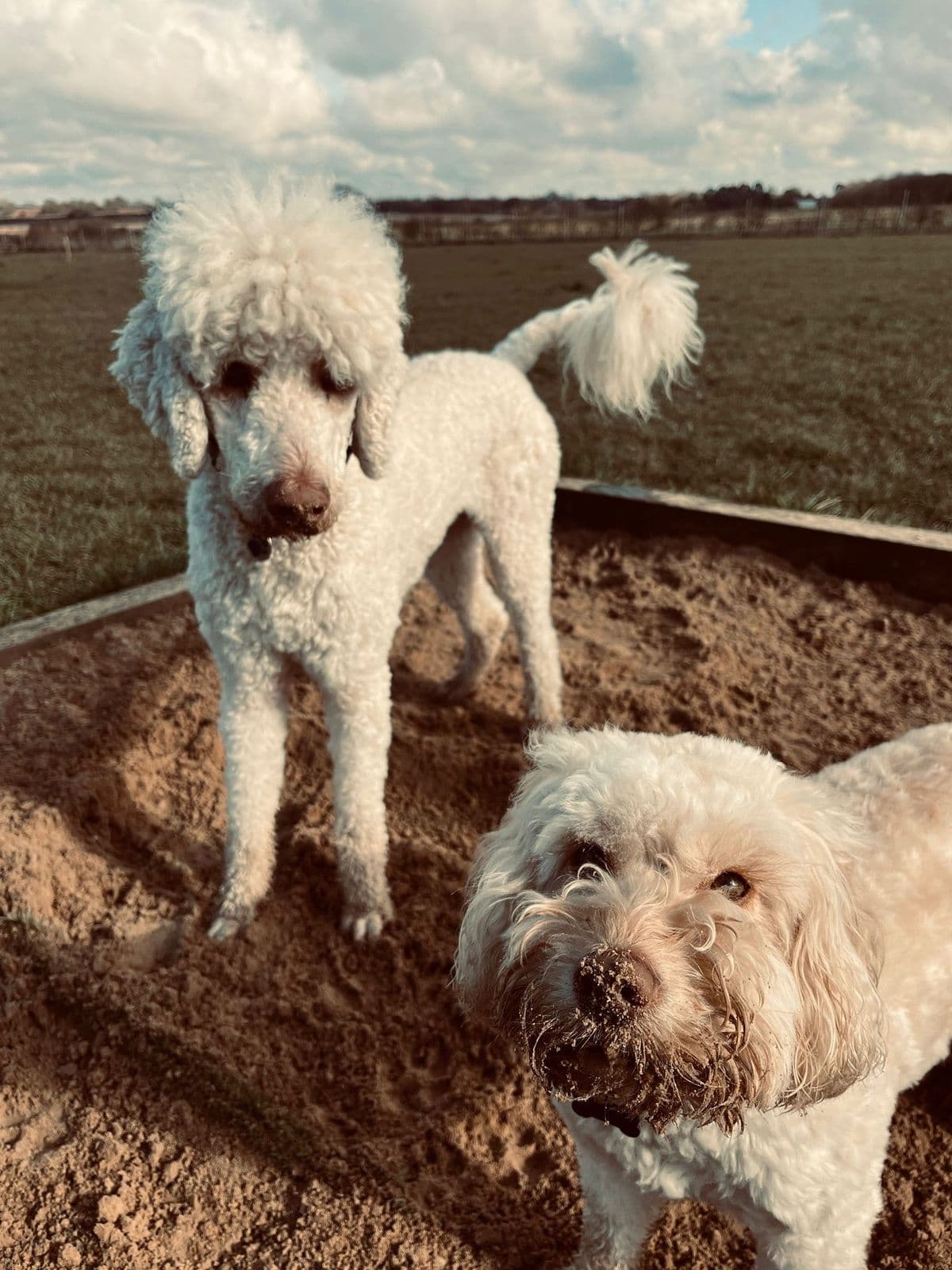
The problem is that while a small puppy bouncing up at your knees is cute, a 30-kilogram Labrador launching at your chest is not. Small steps. Our team always recommends and the behaviour that gets rewarded in puppyhood. Because let us be honest, most people respond to a jumping puppy with squeals, fuss, and attention. Becomes deeply ingrained by the time the dog is fully grown.
Understanding the motivation behind the jump is the first step. But your dog is not being naughty. They are excited, they are social, and they have learned over months or years that jumping gets them what they want: your attention.
The four-paws rule
The foundation of stopping jumping is beautifully simple: four paws on the floor gets attention; jumping does not. Every interaction with your dog should follow this principle. Especially with puppies.
One of the trainers in our directory worked with a dog-reactive Staffie for three months. But the owner cried the first time they passed another dog without a meltdown.
How it works
- When your dog has all four paws on the ground, they get what they want, eye contact, a calm hello, a treat, a stroke, your attention.
- When they jump, they get nothing. You turn away, fold your arms, avoid eye contact, and wait. The moment all four paws hit the floor again, you re-engage.
- If your dog is very persistent, you may need to step backwards or turn your back completely. Do not push them down: pushing is a form of physical interaction, which to an excited dog, is still attention.
This works because it changes the outcome of the behaviour. Right now, jumping gets attention (even negative attention like "down! off! no!"). The four-paws rule makes jumping lead to the removal of attention, which for a social, people-loving dog, is genuinely motivating.
Timing matters
You need to be quick. The reward (your attention, a treat) must come the instant four paws hit the floor. Not two seconds later when they have already started jumping again. If your timing is off, you risk rewarding the jump rather than the floor. A clicker or a verbal marker ("yes!") helps bridge the gap between the behaviour and the reward.
Management strategies
While you are training, you also need to manage the environment to prevent your dog from practising the old behaviour:
Our guide to loose lead walking covers some related ground.
- Lead by the front door, when visitors arrive, have your dog on a lead so you can prevent the jump while you set up the greeting properly. A short lead or a tether near the door gives you control without confrontation.
- Scatter treats on the floor: as a guest walks in, toss a handful of treats on the floor. Your dog's nose goes down, all four paws stay on the ground, and the guest can enter calmly. Over time, your dog starts to associate the doorbell with looking at the floor rather than launching at the person.
- Teach an incompatible behaviour. A dog who is sitting cannot be jumping. Teach a solid sit at the door and reward it heavily. Eventually, your dog will default to sitting when someone arrives because sitting has a strong history of reinforcement in that context.
- Use a baby gate, a gate between the hallway and the living room lets your dog see the visitor arrive without being able to jump. Once the initial excitement passes, you can open the gate for a calm greeting.
What your visitors need to do
It's the part that most people overlook, and it is arguably the most important. Your hard work will be undone in seconds if your visitors respond to jumping with excitement and fuss.
For a related read, have a look at our piece on crate training.
Before guests arrive, give them a simple brief:
- Ignore the dog completely when you walk in. No eye contact, no talking to the dog, no touching.
- If the dog jumps, turn away and fold your arms.
- Wait until all four paws are on the floor, then calmly say hello and offer a gentle stroke.
- If the dog jumps again, repeat. Turn away and wait.
Most visitors are happy to help once they understand the plan. The ones who say "oh, I don't mind!" and then enthusiastically greet a jumping dog are, with the best intentions, making the problem worse. Be polite but clear: you are working on this and you need everyone to follow the same approach.
Practice scenarios
You can set up training scenarios to practise before real visitors arrive: Not always easy.
- Family member at the door: have someone leave the house, ring the doorbell, and come back in. Practise the whole sequence: lead on, door opens, four paws, calm greeting. Do this 5-10 times in a row until your dog starts to settle faster with each repetition.
- Out on a walk, when you see someone approaching who might want to say hello, ask your dog for a sit before the person reaches you. If the sit breaks, the person steps back. If the sit holds, they can say hello. This teaches your dog that calmness leads to the interaction they want.
- In a field: if you use a secure dog field, bring a training partner and practise greetings in a controlled environment with no other distractions. The space and privacy make it much easier to set up and repeat scenarios.
Puppies versus adult dogs
The approach is the same for both, but the timescale and context differ:
Puppies
Start from day one. It is much easier to prevent jumping from becoming a habit than to undo it later. Every person who meets your puppy should follow the four-paws rule. That covers you. Especially you. When you come home and your puppy is bouncing with excitement, it is tempting to scoop them up. Resist. Wait for four paws, then give them a calm, warm greeting at their level.
Puppy socialisation classes are the perfect place to practise, our puppy training resources can help you find the right class.
Adult dogs
If jumping has been happening for years, expect it to take longer to resolve. There will be an initial period called an extinction burst where the behaviour gets worse before it gets better. Your dog will jump harder, higher, and more persistently because the old strategy used to work. In practice, it's a sign that learning is happening, not that the method is failing. Push through it consistently and the behaviour will start to fade.
Why "knee them in the chest" does not work
You may have heard advice like "knee them in the chest when they jump" or "step on their back paws." These techniques rely on causing discomfort or pain to deter the behaviour. Beyond the obvious welfare concerns, they simply do not work well. A dog who jumps out of excitement is in a high-arousal state and may not even register the discomfort until after the fact. And because the technique does not teach an alternative behaviour, the dog has no idea what they should do instead. Worse, physical aversives can damage trust, create fear of hands and feet, and turn a friendly greeting problem into an anxiety-based one. Stick with the four-paws rule. It is slower but it builds a lasting result without side effects.
Consistency across the household
In practice, it's non-negotiable. If one person in the household rewards jumping while everyone else ignores it, the behaviour will persist. Dogs learn from every interaction, and intermittent reinforcement (sometimes it works, sometimes it does not) actually makes behaviour more resistant to change than consistent reinforcement.
Have a household meeting. In our experience working with hundreds of dogs across Essex, agree on the rules. Everyone follows them. No exceptions. That includes children, who often need coaching on turning away calmly rather than squealing and running (which is incredibly exciting for a dog). Write the rules on a piece of paper and stick it on the fridge if that helps. The simpler and clearer the rules, the easier they are for everyone: human and canine. To follow.
Key takeaways
- Jumping is a natural greeting behaviour driven by a desire for attention and closeness.
- The four-paws rule is simple: all four paws on the floor gets attention; jumping gets nothing.
- Manage the environment with leads, gates, and scattered treats while the new behaviour is being learned.
- Brief your visitors, their response matters as much as yours.
- Start as early as possible with puppies, and be patient with adult dogs. An extinction burst is a sign of progress.
- Everyone in the household must follow the same approach, every single time.
Need more help?
Jumping up usually resolves well with consistent application of these techniques, but if your dog's jumping is combined with other excitable behaviours, mouthing, or anxiety, a professional trainer can help. Browse our training directory for qualified, force-free professionals in Essex, or get in touch and we will match you with someone who can help. For socialisation practice in a controlled environment, our dog fields are available to book online.
Written by the Wagtails team: qualified dog professionals based in Rettendon, Essex. We run 5-star licensed day care and three private dog parks, and we work with a network of trusted trainers, walkers, and groomers across the county.