Last reviewed: May 2026
Exercise is more than just a walk around the block
Every dog needs exercise, but the amount and type varies hugely depending on breed, age, health, and individual temperament. And a Border Collie and a Bulldog have very different needs, and getting it wrong in either direction can lead to behavioural problems, weight gain, or injury. This guide breaks it down breed group by breed group so you can find the right balance for your dog.
The most common mistake we see is owners either over-exercising young dogs (damaging growing joints) or under-exercising high-energy breeds (leading to frustration and destructive behaviour at home). Understanding your dog's needs is the foundation of a happy, healthy life together.
How much exercise does the average dog need? for adult dogs
As a starting point, most healthy adult dogs need between 30 minutes and 2 hours of exercise per day. That's a broad range because dogs are individuals. Within that range, the type of exercise matters just as much as the duration. But a 45-minute sniff walk through woodland can be more tiring than a 90-minute march along pavements, because mental stimulation plays a huge role in how satisfied your dog feels afterwards.
We know a local walker who carries a separate lead and harness for every dog. Sounds excessive, but it means every dog walks comfortably.
Exercise should include a mix of physical activity and mental engagement. Walking is great, but it's even better when combined with opportunities to explore, sniff, problem-solve, and interact with their environment. And a dog that gets to use its nose, make choices about where to go, and encounter new sights and sounds will be far more content than one that's dragged along the same route at the same pace every day.
Sporting and gun dog breeds
This group includes Labradors, Golden Retrievers, Spaniels (Cocker, Springer, Working Cocker), Vizslas, Weimaraners, and Pointers. These dogs were bred to work all day in the field, and their energy levels reflect that heritage. Most sporting breeds need a minimum of 90 minutes to 2 hours of exercise daily, and much of that should be off-lead in a safe environment where they can run, retrieve, and use their noses.
For a related read, have a look at our piece on adventure walks vs regular walks.
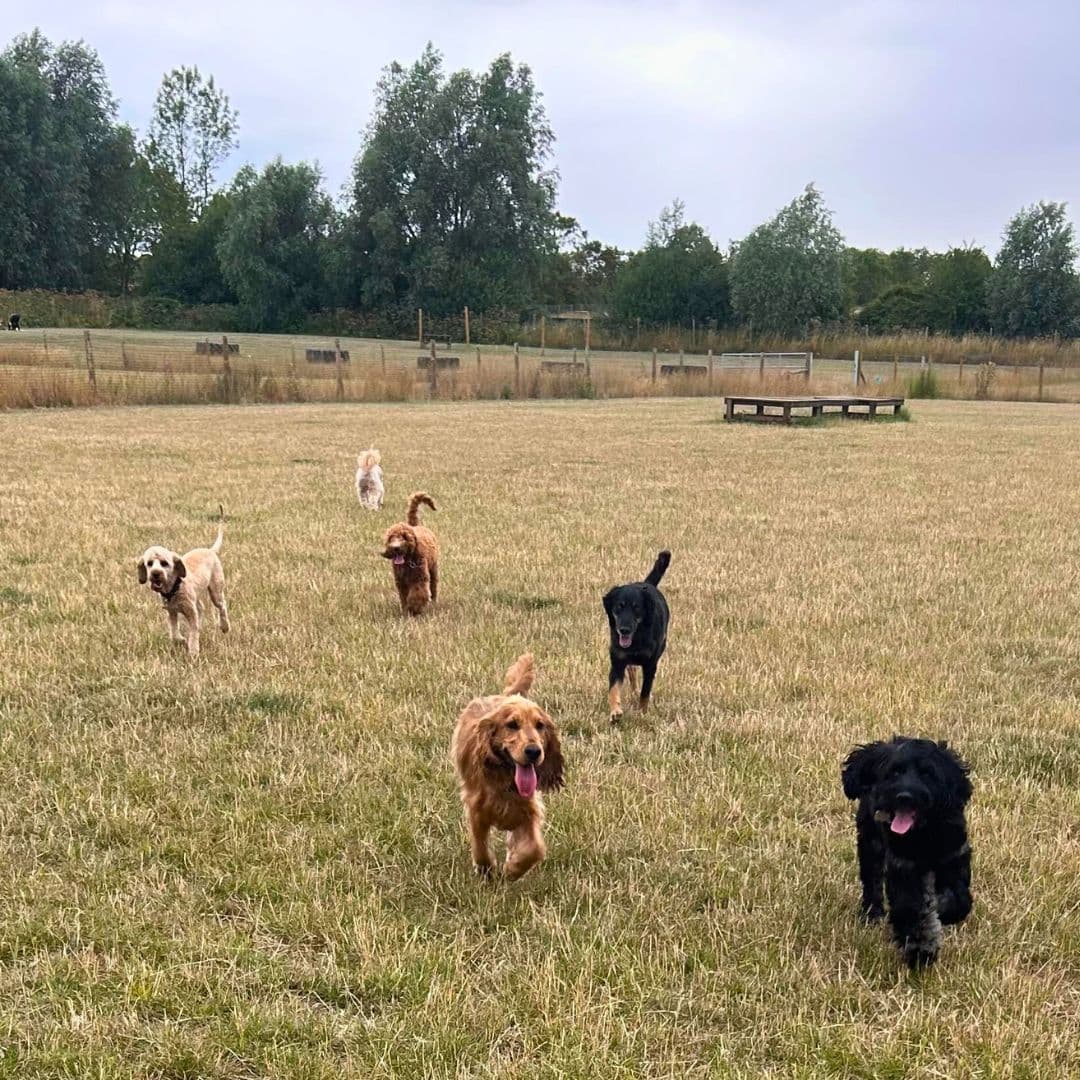
Spaniels in particular have an almost inexhaustible drive to hunt and explore. A Springer Spaniel that gets a 20-minute lead walk twice a day is almost certainly under-stimulated. These breeds thrive with varied exercise. Woodland walks, swimming, retrieving games, and access to open spaces. Our secure dog fields are ideal for letting sporting breeds run freely without the risks of public spaces. If you work full time, a professional dog walker who provides adventure walks can make all the difference. Not overnight, though.
Labradors deserve a special mention because they're simultaneously one of the most popular breeds and one of the most prone to weight gain. They need plenty of exercise but also careful diet management, more on that in our weight management guide.
Working and herding breeds
Border Collies, German Shepherds, Belgian Malinois, Australian Shepherds, and similar breeds were designed for demanding physical and mental work. These dogs need 2 hours or more of daily exercise, and crucially, a significant portion of that needs to be mentally challenging. A Collie that gets two hours of lead walking but no mental stimulation will still be bouncing off the walls at home.
For a related read, have a look at our piece on winter walking safety.
For working breeds, exercise should include training sessions, puzzle-solving, and activities that engage their brains. Agility, scentwork, herding trials, and trick training are all excellent outlets. If you're considering a working breed, be honest about whether your lifestyle can accommodate their needs. Many of the behavioural problems we see: excessive barking, nipping, destructive chewing. Stem from insufficient mental and physical stimulation.
Day care can be an excellent option for working breeds whose owners are out during the day. The combination of social interaction, structured play, and enrichment activities provides exactly the kind of varied stimulation these dogs need. Our day care team are experienced with high-energy breeds and know how to channel that drive productively.
Terriers
Jack Russells, Patterdale Terriers, Border Terriers, Staffordshire Bull Terriers, West Highland Whites, and their many cousins are small to medium dogs with enormous personalities and surprising stamina. Most terriers need at least 60 to 90 minutes of exercise daily, and they benefit enormously from activities that tap into their natural instincts. Digging, chasing, and investigating.
Don't be fooled by their size. Small steps. Our team always recommends a Jack Russell that doesn't get enough exercise will find its own entertainment, and you probably won't enjoy the results. Terriers are resourceful, determined, and remarkably athletic for their size. Short, intense bursts of activity, chase games, tug, training exercises: work well alongside longer walks. Enclosed dog fields are particularly good for terriers because they can run at full speed in a safe environment.
Toy and companion breeds
Chihuahuas, Cavalier King Charles Spaniels, Shih Tzus, Bichon Frises, Pugs, French Bulldogs, and other companion breeds generally need 30 to 60 minutes of exercise daily. Watch closely. These dogs were bred primarily for companionship rather than work, and their exercise needs reflect that.
However, don't make the mistake of thinking small dogs don't need proper exercise. A Cavalier that never gets a proper walk will gain weight and become bored and frustrated. Short, regular outings with plenty of sniffing opportunities, combined with indoor play and gentle training, keep toy breeds happy and healthy.
Flat-faced (brachycephalic) breeds like Pugs and French Bulldogs need careful management. They overheat quickly, struggle with intense exercise, and are prone to breathing difficulties. Shorter, gentler walks in cooler parts of the day are essential. Our summer walking guide has specific advice for flat-faced breeds. If you have a brachycephalic breed, talk to your vet about appropriate exercise levels, and always prioritise keeping them cool and comfortable over hitting any arbitrary step count.
Giant breeds
Great Danes, Newfoundlands, Saint Bernards, Irish Wolfhounds, and other giant breeds have a reputation for being gentle and laid-back, and while that's often true of their temperament, they still need regular exercise. Most giant breeds benefit from 60 to 90 minutes of moderate exercise daily. Steady walks, gentle play, and swimming where available.
The key with giant breeds is protecting their joints. Dogs notice. These dogs are more susceptible to joint problems, hip dysplasia, and arthritis, so exercise should be consistent but not intense. Avoid prolonged running on hard surfaces, sudden stops and starts, and excessive jumping. Soft ground. Grass, woodland paths, sand, is much kinder on giant breed joints. Hydrotherapy and swimming are excellent low-impact options, especially as these dogs age.
Puppies: less is more
Puppy exercise is one of the areas where well-meaning owners cause the most harm. The general guideline is 5 minutes of structured exercise per month of age, twice a day. So a 4-month-old puppy needs about 20 minutes of walking twice daily, not the hour-long hikes some new owners attempt.
Puppies' bones, joints, and growth plates are still developing, and over-exercise can cause lasting damage. In practice, it's especially critical for larger breeds, whose growth plates don't fully close until 12 to 18 months (sometimes later for giant breeds). Let your puppy set the pace, avoid forced exercise, and focus on short, enriching outings with plenty of sniffing and exploring.
That said, puppies need mental stimulation and socialisation far more than they need marathon walks. Puppy day care provides age-appropriate play, socialisation with other puppies, and gentle enrichment: all without the joint stress of long walks. Puppy training classes are another excellent outlet that tire puppies mentally without over-taxing their bodies.
Senior dogs: gentle but consistent
Older dogs still need daily exercise, but the intensity and duration should decrease as they age. Two or three shorter walks (15 to 30 minutes each) are often better than one long outing. Watch for signs of stiffness, reluctance to walk, or lagging behind. These may indicate joint pain or other health issues that need veterinary attention.
Mental stimulation becomes even more important for senior dogs. Keep it simple. Gentle scent games, slow sniff walks, and food puzzles keep ageing minds active and can help slow cognitive decline. Our senior dog care guide covers this in much more detail, including diet adjustments and when to talk to your vet about pain management.
Signs your dog is under-exercised
- Destructive behaviour. Chewing, digging, shredding
- Excessive barking or whining
- Hyperactivity and inability to settle in the evening
- Weight gain
- Attention-seeking behaviour, nudging, pawing, following you constantly
- Restlessness and pacing
Signs your dog is over-exercised
- Stiffness or limping after exercise
- Excessive panting that takes a long time to settle
- Reluctance to go on walks or lagging behind
- Sleeping significantly more than usual
- Worn or cracked paw pads
- Behavioural changes: irritability, snapping, or avoidance
Mental exercise matters just as much
Physical exercise alone isn't enough for any breed. Dogs need to use their brains. A 30-minute training session can be as tiring as an hour-long walk. Scent games, puzzle feeders, training new behaviours, and interactive play all contribute to a well-exercised, contented dog. Sniff walks, where you let your dog lead and explore at their own pace. Are one of the simplest and most effective forms of mental enrichment you can provide. Rain or shine.
If your dog is getting plenty of physical exercise but still seems unsettled, the answer is almost always more mental stimulation, not more miles. A good trainer can help you build enrichment into your daily routine, and day care provides both physical and mental stimulation throughout the day.
Key takeaways
- Know your breed: exercise needs vary enormously between breed groups
- Puppies need less than you think: follow the 5-minutes-per-month rule to protect growing joints
- Senior dogs still need daily movement: just gentler and shorter
- Mental exercise counts: sniff walks, training, and puzzles are as important as running
- Watch your individual dog: signs of over or under exercise tell you more than any guideline
- Variety matters: mix routes, environments, and activities to keep things interesting
Not sure if your dog is getting the right amount of exercise? Our professional dog walkers and day care team can help you find the right balance. Timing matters. Get in touch. We're always happy to chat about your dog's needs.
Written by the Wagtails team: qualified dog professionals based in Rettendon, Essex. We run 5-star licensed day care and three private dog parks, and we work with a network of trusted trainers, walkers, and groomers across the county.