High-Energy Dog Breeds: How to Keep Active Dogs Happy in a Family Home
Living with a high-energy dog is a lifestyle, not just a commitment
High-energy dog breeds are some of the most rewarding dogs to live with. They are intelligent, enthusiastic, loyal, and endlessly entertaining. They can also be exhausting, demanding, and capable of redecorating your house if their needs are not met. The gap between a fulfilled high-energy dog and an under-stimulated one is enormous, and it shows in their behaviour, their health, and your relationship with them.
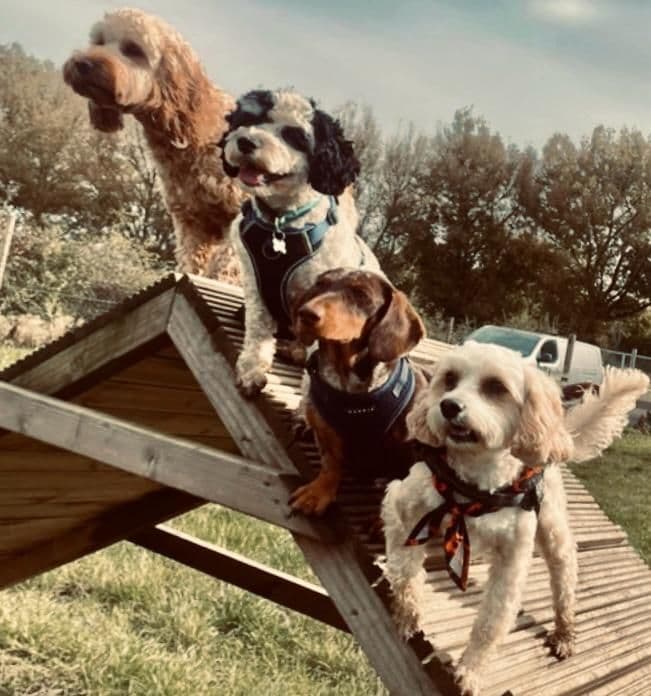
If you are living with a border collie who herds your children, a springer or cocker spaniel who cannot settle in the evening, a husky who has excavated your garden, or a pointer who paces the kitchen for hours, this guide is for you. And the good news is that high-energy dogs do not need to live on a farm or run marathons daily, they need the right combination of physical exercise, mental stimulation, and structured routine, and with the right approach, they can thrive in a family home.
Which breeds need the most exercise?
While every dog is an individual, certain breeds are known to be consistently higher energy than others due to their working heritage. Understanding what your dog was bred to do helps you understand what they need.
Border collies and working sheepdogs
Bred to herd livestock all day in challenging terrain, border collies are arguably the most intelligent and the highest-energy breed in the UK. Most border collies need a minimum of 90 minutes of exercise daily, and a significant portion of that needs to be mentally engaging, not just walking. A bored collie will find work to do, and that work usually involves herding children, chasing cars, or obsessing over lights and shadows.
Collies need tasks. Agility, scent work, trick training, and structured puzzle work are all excellent outlets. Simply running them further does not solve the problem. It just builds a fitter, more endurance-capable dog who still needs mental work. Think of it this way: a collie needs a job, not just a jog.
Springer spaniels and cocker spaniels
Working spaniels were bred to quarter fields, flush game, and retrieve. Hours of intense, nose-driven work in all weathers. In a family home, that drive translates to a dog who needs serious exercise, lots of sniffing opportunities, and something to carry in their mouth at all times. They typically need 60 to 90 minutes of exercise daily, with plenty of off-lead running and opportunities to use their nose.
Spaniels who are not exercised enough become hyperactive, mouthy, and difficult to settle. The classic spaniel complaint, "he's mad, he never stops": is almost always an exercise or stimulation deficit. A properly exercised spaniel is calm, affectionate, and a wonderful family dog. An under-exercised one is a destructive whirlwind.
Siberian huskies and malamutes
Bred to pull sleds across frozen landscapes for hours, huskies have extraordinary endurance and a strong independent streak. They need at least 90 minutes of exercise daily, often more. They also have specific behavioural traits that catch first-time husky owners off guard: they are escape artists (garden fences are a mere suggestion), they howl rather than bark, they have a strong prey drive, and they shed their entire undercoat twice a year in a phenomenon known as "blowing coat."
Huskies need structured physical outlets. Running, canicross, bikejoring, or long hikes. They also need secure environments. Our enclosed dog fields with six-foot fencing are popular with husky owners who need a safe space for off-lead exercise without the risk of escape.
Pointing Breeds & Vizslas
These athletic, high-drive breeds were bred for all-day hunting over large distances. They are muscular, fast, and have seemingly bottomless energy reserves. An adult pointer or vizsla needs at least 90 minutes of vigorous exercise daily, and by vigorous, we mean running, not walking. A gentle stroll around the block will not touch the sides.
Pointers and vizslas are also highly affectionate and people-focused. They often do not cope well with being left alone and are prone to separation anxiety. Combining high exercise needs with separation sensitivity makes them one of the most challenging breeds for working families, but also one of the most rewarding when their needs are met.
Labrador and golden retrievers
Often mistaken for easy, laid-back dogs because of their friendly temperament, working-line retrievers are genuinely high-energy. Show-line retrievers tend to be calmer, but if your lab or golden comes from working stock, they need 60 to 90 minutes of exercise daily, including retrieving games, swimming, and mental engagement. Under-exercised retrievers become destructive chewers and counter-surfers extraordinaire.
Mental vs physical stimulation
One of the biggest mistakes high-energy dog owners make is trying to solve behaviour problems with more exercise alone. Our team always says running your collie for two hours does not tire their brain. It builds a collie with incredible endurance who still needs mental work when they get home. Physical exercise and mental stimulation are different needs, and high-energy breeds need both.
You might also find our post on activities for dog fields helpful.
Physical exercise
Walking, running, swimming, playing fetch, agility, and off-lead exploration.
This burns physical energy and maintains fitness. Our secure dog parks are ideal for safe off-lead running. A dog walker can supplement your exercise routine during the working week.
Mental stimulation
Puzzle feeders, snuffle mats, scent work, training sessions, trick learning, and enrichment activities. This tires the brain and provides the kind of deep satisfaction that physical exercise alone cannot. Ten minutes of focused scent work can tire a collie more effectively than thirty minutes of fetch. See our enrichment toys guide for detailed ideas.
The golden ratio
For most high-energy breeds, aim for roughly equal time on physical exercise and mental stimulation. If your dog gets 60 minutes of walking, add 30-60 minutes of enrichment activities throughout the day. This combination addresses both needs and produces a genuinely settled dog.
Structured routine
High-energy dogs thrive on structure. A predictable daily routine reduces anxiety, provides the framework for adequate exercise and enrichment, and teaches your dog when it is time to be active and when it is time to rest. Without structure, high-energy dogs default to being "on" all the time.
If you're also interested in how much exercise your dog needs, many of the same ideas apply.
A sample daily routine
- 6:30am: Morning walk (30-45 minutes, off-lead if possible)
- 7:30am: Breakfast served in a puzzle feeder or snuffle mat (15-20 minutes of enrichment)
- 8:00am-12:00pm: Rest period (crate, bed, or settle on a mat). If you work from home, this is downtime. If your dog attends day care, drop-off and enrichment happens here.
- 12:00pm: Midday activity (training session, enrichment, or a short walk)
- 12:30pm-4:30pm: Rest period
- 5:00pm: Evening walk (30-45 minutes, with play and off-lead time)
- 6:00pm: Dinner in a Kong or treat ball
- 7:00pm: Evening settle. A chew or lick mat signals wind-down time
The specific times matter less than the consistency. Your dog learns the pattern and starts to self-regulate. They know that after the morning walk comes breakfast, then a nap, and they settle accordingly. Without this structure, they have no framework for when to relax.
Enrichment ideas for high-energy breeds
- Scent work: Hide treats around the house or garden and let your dog find them. Increase difficulty over time. This engages the breed-specific drive of spaniels and pointers and gives collies a problem to solve
- Flirt pole: A pole with a toy on a rope. Mimics prey movement and gives your dog an intense workout in a small space. Brilliant for dogs with high chase drive. Use in your garden or at a secure field
- Training as enrichment: Teach new skills. Trick training. Spin, bow, weave through legs, close doors, tidy toys into a box, is mentally exhausting and strengthens your bond
- Frozen Kongs: Stuff with food and freeze. A 20-minute chewing session that provides deep calm. Prepare a batch at the weekend for the week ahead
- Sniff walks: Let your dog lead the walk with their nose. No agenda, no destination, just following scent. Mentally tiring and deeply satisfying for scent-driven breeds
- Agility classes: Going to a group or one-to-one agility class is ideal for high-drive dogs, and the structured training is perfect for good, safe learning. You can also set up jumps, tunnels, and weave poles in the garden using household items. Agility combines physical exercise with problem-solving and is perfect for high-energy breeds
Day care as a solution
For many families with high-energy breeds, doggy day care is the single most effective solution for keeping their dog happy during the working week. A full day of supervised play, social interaction, structured enrichment, and physical activity provides the kind of comprehensive stimulation that is almost impossible to replicate at home when you are working.
Dogs who attend day care regularly are calmer in the evenings, more settled at weekends, and generally easier to live with. We've had customers tell us that the social interaction with other dogs provides stimulation that no amount of solo exercise can match. For breeds prone to separation anxiety (pointers, vizslas, spaniels), day care also addresses the core issue, they are not left alone.
When to add more activity
How do you know if your high-energy dog needs more? Watch for these signs:
- Destructive behaviour (chewing, digging, shredding)
- Excessive barking or whining
- Inability to settle in the evenings
- Pacing, restlessness, or spinning
- Over-excitement at triggers (doorbell, lead appearing, seeing other dogs)
- Demand behaviour (pawing, nudging, bringing toys constantly)
- Weight gain (under-exercised dogs eat from boredom too)
- If you see these behaviours, it’s always best to have a vet rule out any medical causes
If you are seeing these signs, the answer is usually not just more walking but more variety. Add enrichment. Add training. Book day care. Use secure fields for off-lead running. The solution is almost always more mental work, not just more miles.
Signs of under-stimulation
Under-stimulation in high-energy breeds manifests in predictable ways. Recognising the signs early means you can adjust before behaviour problems become entrenched.
- Obsessive behaviours: Shadow chasing, tail chasing, light fixation (especially in collies)
- Destructive chewing: Not puppy chewing: sustained destruction of furniture, doors, and walls
- Escape attempts: Digging under fences, jumping over barriers, bolting through doors
- Hyperactivity that does not resolve with exercise: If your dog runs for an hour and comes home still wired, they need mental work, not more running
- Reactivity: Some high-energy dogs become reactive on-lead because their frustrated energy has no outlet. They are not aggressive. They are over-aroused and cannot cope
If under-stimulation has led to established behaviour problems, a qualified trainer or behaviourist can help you build a plan. Combined with increased exercise and enrichment, most behaviour problems in high-energy breeds resolve well because the root cause is addressable.
Key takeaways
- High-energy breeds need both physical exercise and mental stimulation. More walking alone is not the answer
- Border collies, working spaniels, huskies, and pointers need 60-90+ minutes of exercise daily
- Structured daily routines help high-energy dogs learn when to be active and when to rest
- Enrichment activities (scent work, training, puzzle feeders) tire the brain as effectively as exercise tires the body
- Day care is one of the most effective solutions for keeping high-energy dogs fulfilled during the working week
- Signs of under-stimulation include destructive behaviour, obsessive behaviours, and inability to settle
Let us help you keep up
High-energy dogs are a joy when their needs are met, and a handful when they are not. If you are struggling to keep your active dog stimulated, or if you simply need support during the working week, our day care, dog walking, and training services are here to help. Our secure dog parks and enclosed fields give your dog the safe off-lead space they need to run and decompress. Get in touch and tell us about your dog. We will help you find the right balance.