Last reviewed: May 2026
What is an enclosed dog field?
An enclosed dog field is a privately hired, fully fenced outdoor space where you and your dog have exclusive access for a set period, usually 50 minutes to an hour. No other dogs, no surprise encounters, no shared space. Just you, your dog, and a secure area where they can run, play, sniff, and explore without any of the risks that come with public spaces.
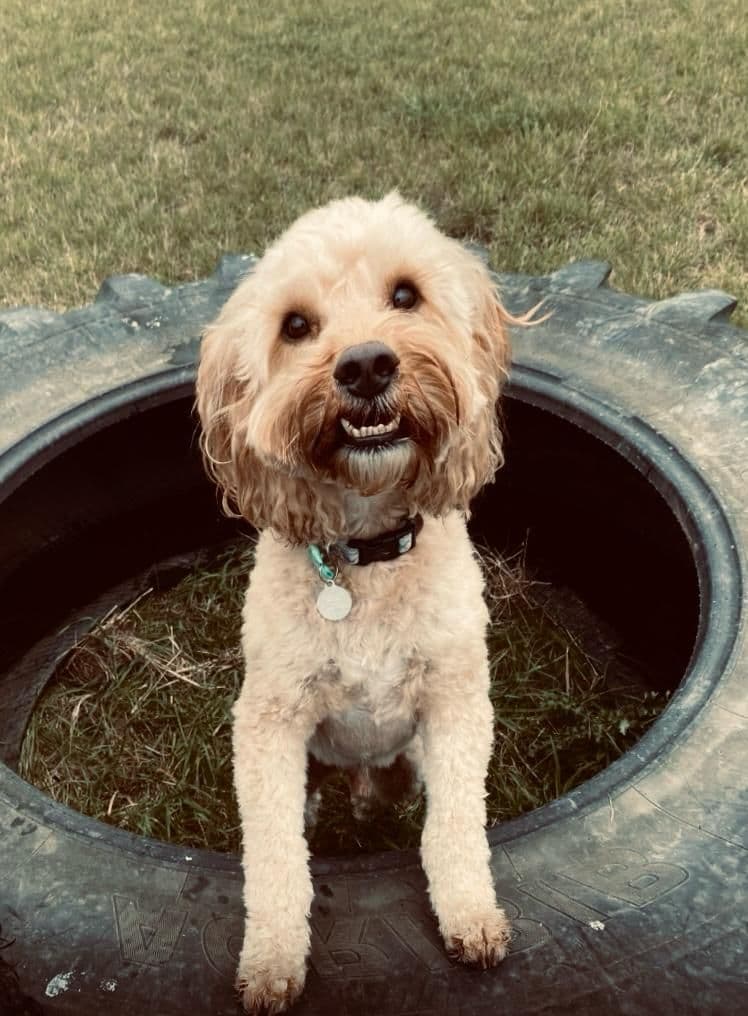
The concept has exploded in popularity over the past few years, and for good reason. Consistency is key. As dog ownership has surged and public parks have become busier, the appeal of a safe, private space has grown enormously. But enclosed fields are not just a luxury or a convenience. For many dogs and their owners, they are genuinely transformative.
Who benefits from enclosed dog fields?
Reactive dogs
If your dog reacts to other dogs with barking, lunging, or anxiety, public walks can be a constant source of stress for both of you. And it works. Every approaching dog is a potential trigger. Every corner turned is a gamble. You spend the entire walk scanning the horizon and managing situations rather than enjoying time with your dog.
A customer recently told us she'd tried five public parks before finding our fields. And the difference, she said, was being able to actually relax.
An enclosed field removes all of that. And dogs notice. Your dog can be off-lead, relaxed, and free to enjoy being a dog without the pressure of unexpected encounters. Over time, regular sessions in a secure field can actually help reduce reactivity by lowering your dog's overall stress levels. A dog that gets regular, stress-free exercise is better equipped to cope when they do encounter triggers in daily life.
Puppies
The early weeks and months of a puppy's life are crucial for building confidence and developing good habits. But puppies are also vulnerable. Their recall is unreliable, their immune systems are still developing (particularly before vaccinations are complete), and their ability to read and respond to other dogs' signals is still a work in progress. More than most people think.
An enclosed field gives you a safe space to let your puppy off lead for the first time, practise recall without risk, and introduce them to the outdoors in a controlled way. It is also a great place for supervised play with one or two known dogs, which is far better for early socialisation than the chaos of a busy park where your puppy might be bowled over by an over-enthusiastic stranger's dog.
Senior dogs
Older dogs still need exercise and mental stimulation, but they may not be able to keep up with the pace of a group walk or may be uncomfortable around boisterous younger dogs. Every dog is different. An enclosed field lets them potter, sniff, and move at their own pace in a quiet, safe environment. For dogs with mobility issues, the flat, even ground of a well-maintained field is much kinder than uneven park terrain.
Dogs working on recall
Recall is one of the most important skills any dog can have, and one of the hardest to develop in a distracting environment. That matters. A long line in a public park gives you some control, but it does not replicate the feeling of true off-lead freedom. An enclosed field provides the perfect training ground. You can let your dog run free and practise recall knowing that even if they ignore you, they cannot leave the field. The fence gives you a safety net while you build reliability.
Dog professionals
Dog walkers, trainers, and behaviourists increasingly use enclosed fields for their work. Our Cressing field is a favourite for this. It's big enough to really let a dog stretch its legs, and group walkers use them for safe off-lead sessions with their pack. Trainers use them for recall work, confidence building, and behaviour modification in a controlled environment. The privacy and security make them really useful professional tools.
Dogs recovering from illness or surgery
A dog that has been on restricted exercise and is being gradually brought back to normal activity needs a safe, controlled space. An enclosed field allows them to move freely without the risk of an over-excited greeting from another dog undoing weeks of careful rehabilitation. Not overnight, though.
What to bring to your session
- Water and a bowl: Most fields provide water, but it is always wise to bring your own, especially in warm weather. Your dog will be running and needs to stay hydrated.
- High-value treats: Whether you are working on recall or simply want to reward good behaviour, bring treats your dog genuinely loves. This is not the time for boring kibble.
- A favourite toy: A ball, a tug toy, or a frisbee can make the session even more enjoyable. Some fields have equipment, but your dog may prefer their own familiar toy.
- Poo bags: Non-negotiable. Always clean up after your dog, even in a private field. The next person to use it deserves a clean space.
- A long line (optional): If your dog's recall is not yet reliable and you are using the field for training, a 10-metre long line gives you a middle ground between full off-lead and on-lead.
- A towel: For wiping muddy paws before they get back in the car.
- A camera: Seriously. The joy of watching your dog sprint across an open field is something worth capturing.
Making the most of your 50 minutes
Fifty minutes sounds like a lot, but it goes quickly. Here is how to structure your session for maximum benefit:
If you're also interested in activities for dog fields, many of the same ideas apply.
We've written separately about recall training in a dog field if you want to read more.
The first five minutes: let them decompress
When you unclip the lead, your dog is going to want to explore. Let them. In practice, it's their time to sniff the boundaries, investigate the scents left by previous visitors, and take in the environment. Do not immediately start throwing balls or calling them back. Give them a few minutes to settle into the space.
Ten to fifteen minutes: active play or training
Once your dog has explored, this is a good time for more structured activity. Play fetch, work on recall, practise some tricks, or set up a mini agility course if the field has equipment. It's when your dog's energy is highest and their focus is good.
Ten minutes: free exploration
Let your dog do their own thing for a while. Sniffing is incredibly enriching for dogs (we know. It sounds obvious). A ten-minute sniffing session can be as tiring as a thirty-minute walk. Follow your dog around the field and watch what interests them. You will learn a lot about what they find rewarding.
Another ten to fifteen minutes: play or socialisation
If you have brought a friend's dog for a play date, this is a good time for supervised interaction. If it is just you and your dog, more play, more training, or just more companionship. Sit on the grass and let your dog come to you. Some of the best moments in a field session are the quiet ones.
Last five to ten minutes: wind down
Start to slow things down before the session ends. A few easy recalls, some gentle play, and a good scatter of treats in the grass to finish on a positive, calm note. It makes the transition back to the lead much smoother than trying to catch an over-stimulated dog as the clock runs out.
Enclosed fields vs public parks
Safety
In practice, it's the biggest difference. In an enclosed field, you control the environment. There are no unknown dogs, no cyclists, no livestock, no busy roads nearby, and no gaps in the fence. In a public park, you control almost nothing. Your dog might meet a friendly dog, or they might meet one that is not. They might find something delicious and disgusting to eat. They might spot a squirrel and bolt towards a road. An enclosed field eliminates all of these risks.
Cleanliness
Public parks are shared by hundreds of dogs, not all of whose owners pick up after them. Enclosed fields are maintained between sessions and used by one dog (or group) at a time. The risk of your dog encountering waste, broken glass, or discarded food is dramatically lower.
Exclusivity
In a public park, you share the space with every other user. In our experience working with hundreds of dogs across Essex, in an enclosed field, you have paid for exclusive access. The field is yours for your session. No interruptions, no negotiations with other owners, no managing your dog's interactions with strangers.
Cost
Public parks are free. Enclosed fields typically cost 7 to 15 pounds per session in Essex. That is a real cost, but for the security, cleanliness, and exclusivity you get, most owners who try it find it well worth the money. Many of our dog fields offer wallet credit systems where you buy sessions in bulk at a discount.
Social benefits
Public parks do have one advantage: the chance for your dog to meet and socialise with a variety of other dogs (we see it all the time). If your dog is confident, well-socialised, and enjoys meeting new friends, public parks provide that opportunity in a way that a private field does not. The ideal approach for most dogs is a combination of both: regular visits to enclosed fields for safe, stress-free exercise, and supervised park visits for social interaction when appropriate.
Key takeaways
- Enclosed dog fields offer exclusive, secure, off-lead exercise for you and your dog
- They are especially valuable for reactive dogs, puppies, seniors, dogs learning recall, and professionals
- Bring water, treats, toys, and poo bags to every session
- Structure your session: explore, play, sniff, wind down
- Fields complement public parks rather than replacing them entirely
- The cost is modest and most providers offer bulk-buy discounts
Book your first session
We have enclosed dog fields and dog parks across Essex, all fully fenced, well-maintained, and available to book online. Whether you need a safe space for recall training, a stress-free outing for a reactive dog, or simply a beautiful field where your dog can run until they are happily exhausted, we have got you covered.
Written by the Wagtails team: qualified dog professionals based in Rettendon, Essex. We run 5-star licensed day care and three private dog parks, and we work with a network of trusted trainers, walkers, and groomers across the county.