Last reviewed: May 2026
An honest conversation about weight
According to veterinary surveys, over half of dogs in the UK are overweight or obese. That makes excess weight the most common health problem in pet dogs. More common than dental disease, arthritis, or skin conditions. Yet many owners don't recognise that their dog is carrying too much weight, or if they do, they're unsure what to do about it.

This isn't about judgement. But it adds up. Dogs gain weight for lots of reasons, and most of them come down to small, well-intentioned habits that accumulate over time. An extra treat here, a slightly generous food portion there, one too many scraps from the dinner table, individually these things seem harmless, but over months and years they add up. The good news is that weight management in dogs is straightforward once you understand the basics and commit to a plan.
How to tell if your dog is overweight
Breed standards and weight charts give you a rough starting point, but every dog is different. At our day care, we keep a close eye on every dog's health, and the most reliable way to assess your dog's weight at home is the body condition score. But a visual and hands-on assessment that works for any breed, size, or shape.
A customer told us she only noticed her dog was in pain after reading our signs-to-watch list. And the vet confirmed a dental issue that had been there for weeks.
The rib test
Place your hands on your dog's sides, fingers pointing downward, and run them gently over the ribcage. Watch closely. You should be able to feel individual ribs beneath a thin layer of fat and muscle. If you can count each rib easily without pressing, your dog may be underweight (and they will test you). If you have to press firmly to feel the ribs, or can't feel them at all, your dog is carrying excess weight.
The waist test
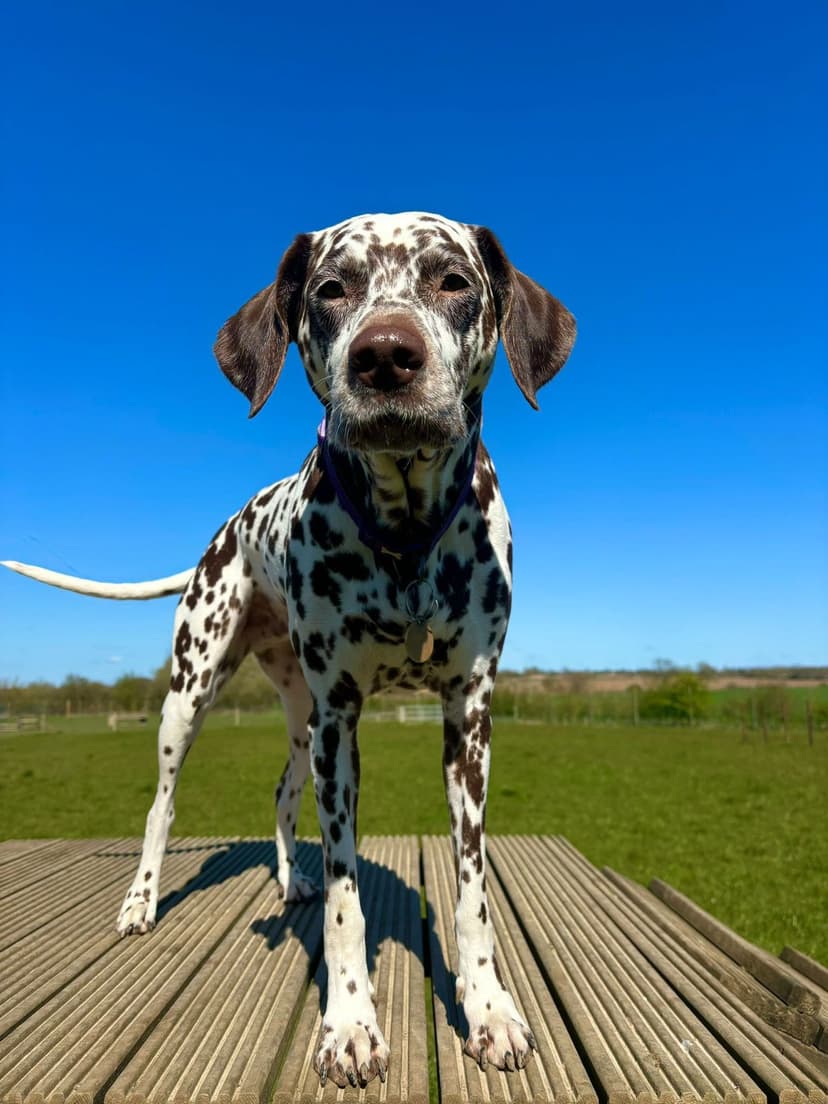
Look at your dog from above. Dogs notice. You should see a visible waist, an indentation behind the ribs before the hips. From the side, the belly should tuck up from the chest towards the hindquarters. A dog with no visible waist or a rounded, barrel-shaped body when viewed from above is likely overweight. A dog whose belly hangs lower than the chest when viewed from the side is significantly overweight.
The overall silhouette
A healthy dog has a visible body shape. You can distinguish the ribcage from the waist and the waist from the hips. An overweight dog loses these contours and takes on a more uniform, rounded appearance. In very overweight dogs, fat deposits become visible on the neck, legs, and base of the tail.
If you're unsure, your vet can provide a formal body condition score and tell you exactly how much weight your dog needs to lose (or gain). Most vets offer free weight clinics with a nurse: take advantage of these.
Why does it matter?
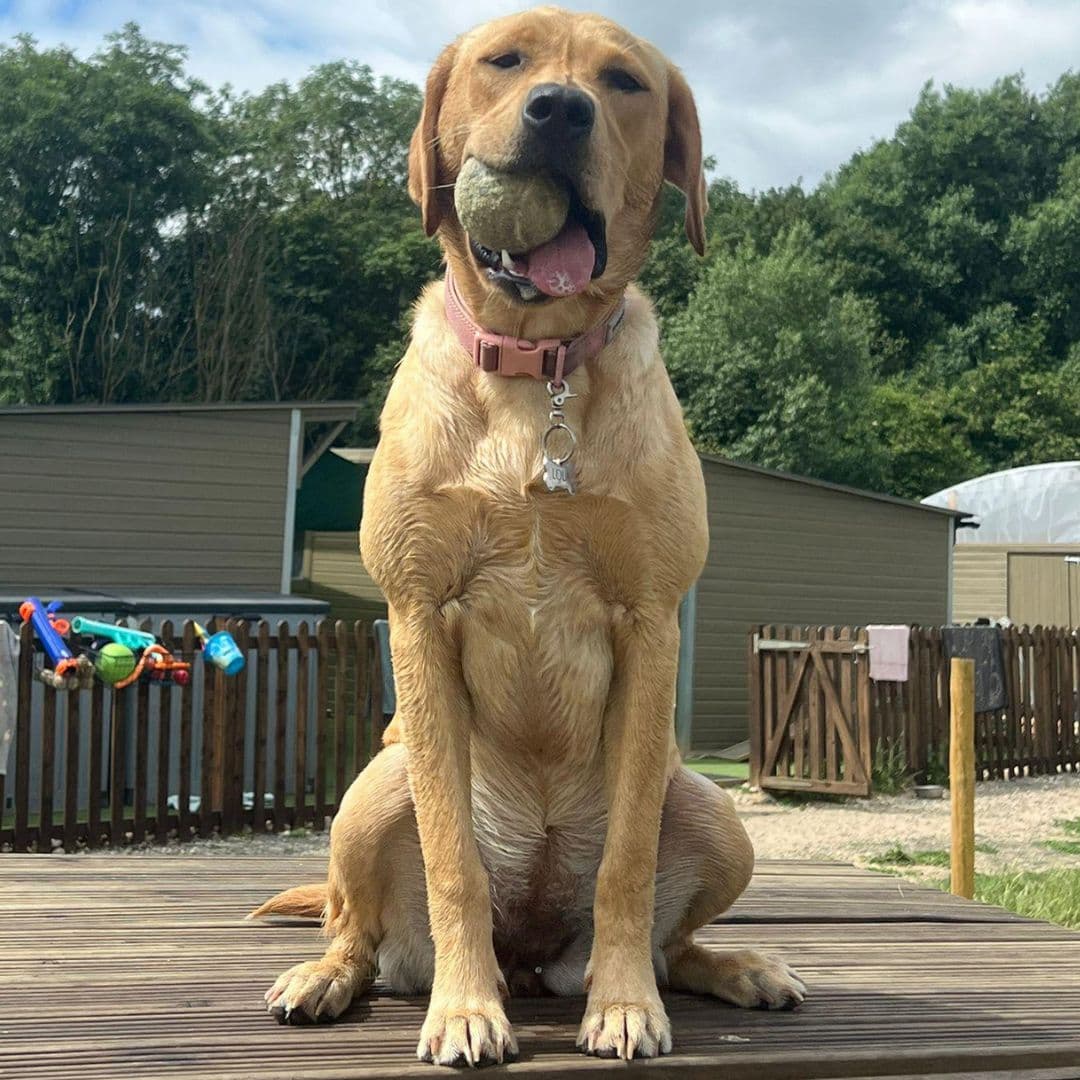
Carrying excess weight isn't just a cosmetic issue. It directly impacts your dog's health, quality of life, and lifespan. Research consistently shows that lean dogs live significantly longer than overweight dogs. One landmark study found that lean Labradors lived nearly two years longer than their overweight littermates.
Our guide to how much exercise your dog needs covers some related ground.
The health risks of excess weight in dogs include: No exceptions.
- Joint disease and arthritis: extra weight puts enormous stress on joints, particularly knees, hips, and spine; arthritis develops earlier and progresses faster in overweight dogs
- Diabetes: just as in humans, obesity is a major risk factor for type 2 diabetes in dogs
- Heart and respiratory disease. The cardiovascular system works harder, and excess weight around the chest restricts breathing, particularly in brachycephalic breeds
- Reduced exercise tolerance: overweight dogs tire faster, which leads to less exercise, which leads to more weight gain; it becomes a vicious cycle
- Increased surgical and anaesthetic risk: overweight dogs have higher complication rates during surgery and slower recovery times
- Skin problems: fat folds create warm, moist environments that breed bacterial and yeast infections
- Reduced quality of life: studies show overweight dogs are less playful, less active, and show more signs of chronic discomfort than lean dogs
Common causes of weight gain
Understanding why your dog has gained weight helps you address the root cause, not just the symptom:
If you're also interested in senior dog care, many of the same ideas apply.
Overfeeding
The most common cause by far. Feeding guidelines on dog food packaging are just guidelines. They're based on averages and often overestimate what an individual dog actually needs. If your dog is gaining weight on the recommended amount, they need less food, full stop.
Treats and extras
Treats, dental chews, training rewards, scraps from the table, and "just a little bit" from the kids all add up. For a small dog, a single digestive biscuit is equivalent (in caloric terms) to a human eating an entire burger. Many owners are shocked when they calculate how many extra calories their dog receives from treats each day.
Neutering
Neutered dogs have lower metabolic rates than intact dogs, roughly 20 to 30 per cent lower. If you don't reduce food intake after neutering, weight gain is almost inevitable. It's one of the most common triggers for weight problems, particularly in Labradors, Spaniels, and Beagles.
Insufficient exercise
A dog that doesn't burn enough calories will store the excess as fat. Lifestyle changes, a new baby, working from home, a move to a flat from a house with a garden: can quietly reduce a dog's activity level without the owner consciously adjusting food intake to compensate.
Medical conditions
Hypothyroidism and Cushing's disease can cause weight gain that doesn't respond to normal diet and exercise changes. Timing matters. If your dog is gaining weight despite appropriate food and exercise levels, ask your vet to run a blood test. Worth every penny.
Adjusting food intake
The foundation of weight management is food control. Here's how to approach it practically:
- Weigh the food: stop estimating and use scales; even a 10 per cent overestimate each meal adds up to significant excess over weeks
- Reduce by 10 to 15 per cent: cut the daily portion by this amount initially; reassess after 2 to 4 weeks
- Feed twice daily: split the daily allowance into two meals for better satiety and metabolic consistency
- Account for treats: treats should make up no more than 10 per cent of daily calorie intake; reduce meal portions to account for any treats given
- Consider a weight management food: these are formulated to be lower in calories but higher in fibre, keeping your dog full on fewer calories
Treats and alternatives
You don't have to eliminate treats entirely. Our team always recommends but switching to lower-calorie options makes a significant difference:
- Carrot sticks, green beans, and cucumber slices. Most dogs enjoy these and they're virtually calorie-free
- Small pieces of lean chicken or turkey. Excellent for training without the calorie hit of commercial treats
- Use a portion of the daily food allowance as training rewards rather than adding extra treats on top
- Break treats into smaller pieces. Your dog gets the same reward experience from a tiny piece as from a whole biscuit
- Scatter a portion of their dinner in the garden or in a puzzle feeder, it becomes enrichment and food simultaneously
Building an exercise plan
Exercise alone rarely causes weight loss in dogs (just as in humans, you can't out-exercise a bad diet). Routine helps. But exercise is essential for maintaining muscle mass, improving fitness, and supporting long-term weight management:
- Start gradually: if your dog is significantly overweight, begin with short, gentle walks and build up over weeks; jumping straight into vigorous exercise risks injury
- Aim for consistency: regular daily walks are more effective than occasional long outings
- Add variety: different routes, different surfaces, and off-lead time (where safe) increase calorie burn and keep your dog engaged
- Consider swimming: excellent low-impact exercise for overweight dogs, particularly those with joint problems
- Use secure dog fields. Safe off-lead space where your dog can run at their own pace without the risks of public parks
Day care is one of the most effective exercise interventions for overweight dogs. A full day of supervised play, running, and activity burns significantly more calories than a lunchtime walk, and the social element keeps dogs motivated and engaged. Several of our day care dogs have achieved healthy weight targets with the combination of regular day care and adjusted home feeding.
When to see a vet
Consult your vet if:
- Your dog is significantly overweight (more than 20 per cent above ideal weight)
- Your dog is gaining weight despite appropriate food and exercise
- Your dog has mobility problems, breathing difficulties, or other health issues related to weight
- You're not sure what your dog's ideal weight should be
- You want a structured weight loss programme with professional monitoring
Vets take weight seriously because they see the consequences daily, dogs with preventable joint disease, diabetes, and shortened lifespans. They'll work with you to create a realistic plan and monitor progress. Most vet practices offer free nurse-led weight clinics for ongoing support.
How day care helps with weight management
Dogs in regular day care tend to maintain healthier weights for several reasons: they get consistent, high-quality exercise throughout the day; they eat their meals at set times rather than grazing; and our staff monitor their body condition and can flag changes to owners early. If your dog needs to lose weight, day care combined with dietary adjustments at home is one of the most effective approaches we've seen.
Key takeaways
- Use the rib and waist test: visual assessment is more reliable than scales alone
- Weigh the food: stop estimating; small overages compound into significant weight gain
- Account for every treat: treats should be no more than 10 per cent of daily calories
- Neutering changes calorie needs: reduce food by 20 to 30 per cent after the operation
- Exercise supports weight management, but diet is the primary driver of weight loss
- See your vet if unsure: free weight clinics are available at most practices
- Day care burns calories: regular active days make a real difference
If your dog is carrying a few extra pounds, don't ignore it. Small changes to food portions, treats, and exercise can make a significant difference to their health, comfort, and lifespan. Our dog walking and day care services help dogs stay active, and we're always happy to chat about your dog's specific needs. Get in touch. We want every dog to live their healthiest, happiest life.
Written by the Wagtails team: qualified dog professionals based in Rettendon, Essex. We run 5-star licensed day care and three private dog parks, and we work with a network of trusted trainers, walkers, and groomers across the county.