Last reviewed: May 2026
What is reactivity, and why does it make walks so hard?
Reactivity is when a dog overreacts to things in their environment. Other dogs, people, cyclists, joggers, or loud noises. And it usually looks like barking, lunging, growling, or pulling hard on the lead. From the outside it can look aggressive, but in the vast majority of cases, reactivity is driven by fear, frustration, or over-excitement rather than genuine aggression.
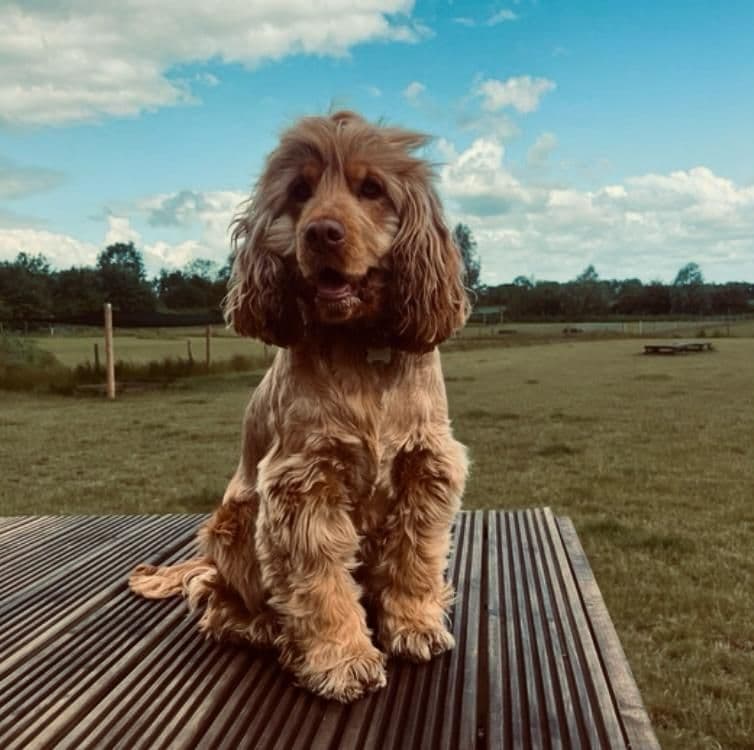
Living with a reactive dog changes everything about how you walk. You start scanning ahead for triggers, crossing roads to avoid other dogs, walking at odd hours to dodge busy times. And it is exhausting, isolating, and can make you dread what should be the best part of your dog's day. Many owners of reactive dogs describe feeling embarrassed, anxious, or guilty. Even though reactivity is incredibly common and absolutely not their fault.
Why public spaces are so difficult for reactive dogs
Public parks and footpaths are unpredictable. At our Rettendon park, we've noticed that you cannot control whether an off-lead dog will come bounding over, whether a jogger will appear around a blind corner, or whether someone's child will run up wanting to say hello. For a reactive dog, every one of these encounters is a potential trigger. And every time your dog reacts, and is reinforced by the trigger going away. And the behaviour gets a little more practised and a little more automatic.
One of our regulars brings three Whippets to the Writtle field. The first ten minutes are chaos, but after that they just trot around together like they own the place.
The on-lead requirement in most public spaces adds another layer of difficulty. A lead restricts your dog's ability to create distance from a trigger, which is their natural coping strategy. This trapped feeling can intensify the reaction. And because you are physically connected by the lead, your own tension and stress transmit directly to your dog, creating a feedback loop that neither of you can break.
How a secure dog field changes everything
When you book a secure dog field, you get 50 minutes of completely private, fully enclosed space. Small steps. No other dogs. No strangers. No triggers. This one simple thing is profoundly transformative for reactive dogs, and here is why.
If you're also interested in reactive dog training, many of the same ideas apply.
Off-lead freedom without risk
Many reactive dogs have never been off-lead outside their own garden because their owners simply cannot risk it. In a secure field, you can unclip the lead the moment you walk through the double-gated entry. Watching a reactive dog run freely for the first time, really stretch their legs, roll in the grass, sniff without tension: is one of the most rewarding things you will see. The sheer joy of it is often emotional for owners who have spent months or years managing their dog's reactivity in public.
Decompression and stress reduction
Reactive dogs carry a lot of stress, and that stress accumulates. Every triggered walk adds cortisol that can take days to clear from the body. A field session is decompression time. A chance for your dog's nervous system to genuinely relax. Regular field time reduces baseline stress levels, which makes everything else in life a little easier to handle.
A safe place to train
You cannot effectively train a dog who is already over threshold. Keep it simple. In a public park, your reactive dog may spend the entire walk scanning for triggers, unable to focus on you at all. In a field, they can relax enough to engage their thinking brain. It'll make it the ideal environment for practising recall, building focus, and working on the foundation skills that underpin all behaviour improvement.
Rebuilding your relationship
When every walk is tense and stressful, the relationship between you and your dog suffers. You start to associate being out together with anxiety rather than enjoyment. Field sessions give you back the fun. You can play, laugh, and enjoy each other's company without the constant vigilance that reactive dog ownership demands in public spaces. This matters enormously for your wellbeing and your dog's.
Getting started: your first field session with a reactive dog
If your dog has never been to a secure field before, a few tips will help the first visit go smoothly. Arrive a few minutes early so you can check the field is clear and the previous booking has left. Walk your dog from the car to the gate on a loose lead, keeping things calm and unhurried. Once inside the double gate, close both gates before unclipping the lead.
Our guide to recall training in a dog field covers some related ground.
Give your dog time to decompress. When customers book one of our private fields, we always suggest the first five to ten minutes should be entirely free. Let them sniff, explore, and process the new environment. Resist the urge to start training or calling them straight away. For a reactive dog who spends most walks in a state of hypervigilance, this unrestricted sniffing time is genuinely therapeutic. You may notice their posture change as they realise there are no triggers to worry about. Shoulders dropping, tail relaxing, breathing slowing. That shift is exactly what you are here for.
After the initial explore, engage your dog with whatever they enjoy most: a gentle game of fetch, some scattered treats in the grass, or a few easy recalls. Keep the energy moderate and the tone warm. The goal of the first session is simply for your dog to associate the field with safety, freedom, and good things.
Building confidence over time
Regular field sessions create a pattern of positive outdoor experiences that gradually shift your dog's emotional baseline. A dog who has had a relaxed, joyful session in the field that morning is better equipped to handle a mild trigger on the afternoon walk. Over weeks and months, you build a bank of good experiences that start to outweigh the bad ones.
Many owners report that their dog's reactivity noticeably improves after incorporating weekly field sessions. Every dog is different. Not because the field directly addresses the triggers, but because the reduced stress and increased confidence make their dog more resilient in all contexts.
Pairing field time with professional training
A field is not a replacement for working with a qualified behaviour professional, but it is the perfect complement. A trainer can help you understand your dog's specific triggers and emotional state, then build a structured plan to change their response. Between training sessions, the field gives you a safe space to practise the exercises your trainer has set without the risk of unexpected triggers derailing your progress.
Some trainers even run sessions in hired fields, using the controlled environment to set up carefully managed exposures at a pace your dog can handle. If your dog is reactive towards other dogs, a trainer might arrange a calm stooge dog at a safe distance across the field, something that would be impossible in a public park. Every single time.
Browse our dog training directory to find a qualified, force-free trainer in Essex who specialises in reactive dogs (it's more common than you think). All professionals in our directory are vetted and insured.
Real-life scenarios: how owners use fields for reactive dogs
Here are some of the most common ways reactive dog owners use our fields: Not overnight, though.
- Weekly decompression sessions, a standing booking that gives their dog reliable off-lead exercise in a zero-trigger environment.
- Post-stressful-walk recovery: after an unavoidable trigger encounter on a public walk, a quick field session helps their dog decompress and end the day on a positive note.
- Training reinforcement: practising recall, focus exercises, and engagement games set by their trainer, without the risk of unexpected triggers.
- Confidence building for dog-fearful dogs: using the field to build positive associations with being outdoors, gradually increasing the challenge level as the dog gains confidence.
- Multi-dog household management: giving each reactive dog their own individual off-lead session to meet their exercise needs without the stress of managing reactivity in public with multiple dogs.
Long-term benefits
The benefits of regular field access for reactive dogs extend far beyond the session itself:
- Lower baseline stress: regular decompression means your dog starts each day calmer and more resilient.
- Better training outcomes. A dog who exercises freely and regularly is more able to learn and retain new skills.
- Improved physical health: many reactive dogs are under-exercised because public walks are so difficult. Field sessions fill that gap.
- Owner wellbeing. The relief of having one guaranteed stress-free outing per week is significant. Reactive dog ownership can be lonely and demoralising; field sessions give you back something enjoyable.
- Strengthened bond, when you spend positive time together without tension, your relationship improves. Your dog starts to see outdoor time with you as joyful rather than stressful.
Key takeaways
- Reactivity is driven by fear, frustration, or over-excitement. Not aggression.
- Public spaces are unpredictable and often make reactivity worse over time.
- A secure dog field provides safe, private off-lead time that reduces stress and builds confidence.
- Regular field sessions complement professional training and produce better long-term outcomes.
- The benefits extend to owners too: less anxiety, more enjoyment, a stronger bond.
Give your reactive dog the freedom they deserve
If you are managing a reactive dog, you are not alone, and it does get better. It works. A secure dog field is one of the most impactful tools available to you. Find your nearest Wagtails field and book a session today. Your dog will thank you, and so will your stress levels. If you would like guidance on pairing field time with training, drop us a message, we are always happy to help point you in the right direction.
Written by the Wagtails team: qualified dog professionals based in Rettendon, Essex. We run 5-star licensed day care and three private dog parks, and we work with a network of trusted trainers, walkers, and groomers across the county.