Last reviewed: May 2026
Why does my dog need mental enrichment?
Dogs were bred to work. Whether that work involved herding sheep, retrieving game, tracking scents, or guarding property, every breed has a history of doing something meaningful with their day. Modern pet dogs, by contrast, spend most of their time in our homes with relatively little to do. But the walks, toys, and cuddles we provide are valuable, but they often do not fully satisfy the deep-seated need for mental challenge and purposeful activity.
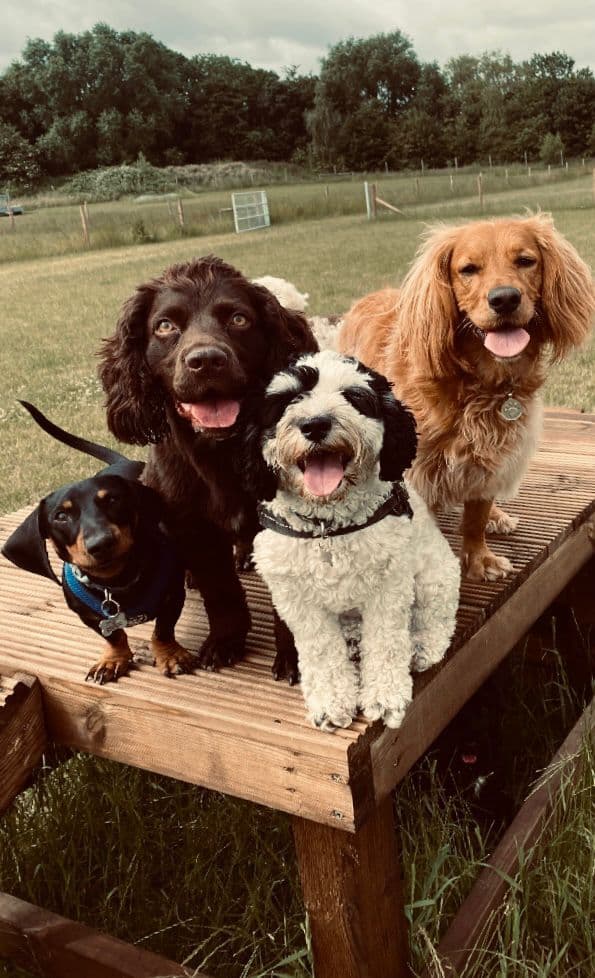
When that need goes unmet, dogs find their own ways to fill the gap, and those ways are rarely ones we appreciate. Destructive chewing, excessive barking, digging, counter-surfing, and general restlessness are all commonly rooted in boredom and under-stimulation. And the solution is not more physical exercise (although that helps). It is enrichment: activities that engage your dog's brain, satisfy their natural instincts, and give them something meaningful to do. No exceptions.
The best part is that enrichment does not require expensive equipment or a lot of time. Consistency is key. Many of the most effective activities use things you already have at home. Here are ten ideas to get you started.
1. Scatter feeding
It's the simplest enrichment activity imaginable, and it is one of the most effective. Instead of putting your dog's food in a bowl, scatter it across the grass in your garden (or across a snuffle mat or towel indoors). That is it.
A customer recently told us that the best decision she made for her new puppy was getting everything set up before bringing him home. No scrambling, no stress.
Why does it work? Because it turns a 30-second meal into a 15 to 20-minute foraging session. And your dog has to use their nose to find every piece, which engages the part of their brain that is most naturally active. Sniffing is genuinely tiring for dogs. The olfactory cortex takes up a proportionally enormous part of their brain, and using it intensively burns real mental energy.
Variations
- Scatter food in longer grass for a harder challenge
- Use a snuffle mat indoors on rainy days
- Hide food under plant pots or towels and let your dog find it
- Scatter a mix of their regular food and a few higher-value treats for added motivation
2. Frozen Kongs and lick mats
Stuffed Kongs are a classic for good reason. Fill a Kong with a mixture of your dog's food, a little peanut butter (check it is xylitol-free), mashed banana, plain yoghurt, or wet dog food, then freeze it overnight. The result is a long-lasting challenge that keeps your dog busy for 20 to 40 minutes depending on the difficulty.
Our guide to activities for dog fields covers some related ground.
Lick mats work on a similar principle. Spread a thin layer of something tasty (yoghurt, pate, mashed sweet potato, cream cheese) across the mat and let your dog lick it off. The repetitive licking action actually promotes the release of calming hormones, making lick mats particularly good for anxious dogs or for use during stressful situations like fireworks or storms.
Variations
- Layer different fillings in a Kong for varying textures and flavours
- Add a few pieces of kibble to the filling so your dog has to work harder to extract them
- Freeze the lick mat for a longer-lasting challenge
- Try different shaped Kongs and food toys for variety
3. Cardboard box puzzle
Take a cardboard box, put some treats inside, close the flaps, and give it to your dog. Patience pays off. They have to figure out how to get in, whether that means pushing the flaps open, tearing the cardboard, or flipping the box over. It is a simple problem-solving exercise that most dogs find hugely satisfying.
You might also find our post on moving house with a dog helpful.
For a more advanced version, nest smaller boxes inside larger ones, with treats at different levels. Or stuff the box with scrunched-up newspaper with treats hidden among the paper. The rustling, tearing, and searching engages multiple senses and can keep a dog occupied for a surprisingly long time.
Variations
- Use different sizes and shapes of boxes
- Tape the box lightly closed for a harder challenge
- Put a treat-filled box inside a paper bag inside another box for multi-layered fun
- Supervise to make sure your dog does not eat large pieces of cardboard
4. The muffin tin game
Place treats in a few of the cups of a muffin tin, then cover all the cups (including the empty ones) with tennis balls. Your dog has to work out which cups contain treats and figure out how to remove the tennis balls to get to them. It is a puzzle that requires both scent work and physical dexterity.
This game is particularly good for dogs that eat too quickly, as it naturally slows down their food intake. We've had customers tell us that it also works well as a rainy-day activity when outdoor exercise is limited. Start with treats in every cup so your dog gets the idea, then reduce the number of cups with treats as they get better at it.
Variations
- Use different objects to cover the cups: tennis balls, balled-up socks, small toys
- Place the muffin tin on a non-slip mat to stop it sliding around
- Try a 12-cup tin for a bigger challenge
- Use the game to feed part of your dog's daily food allowance
5. Find it (scent work at home)
Scent work is one of the most mentally tiring activities you can offer your dog, and you can do it anywhere in your house with no equipment at all. Start by holding a treat in your closed fist and letting your dog sniff it out. When they nudge the correct hand, open it and let them have the treat. Once they understand the game, start hiding treats around the room while your dog waits (or while someone holds them). Release them with a "find it" cue and let them search.
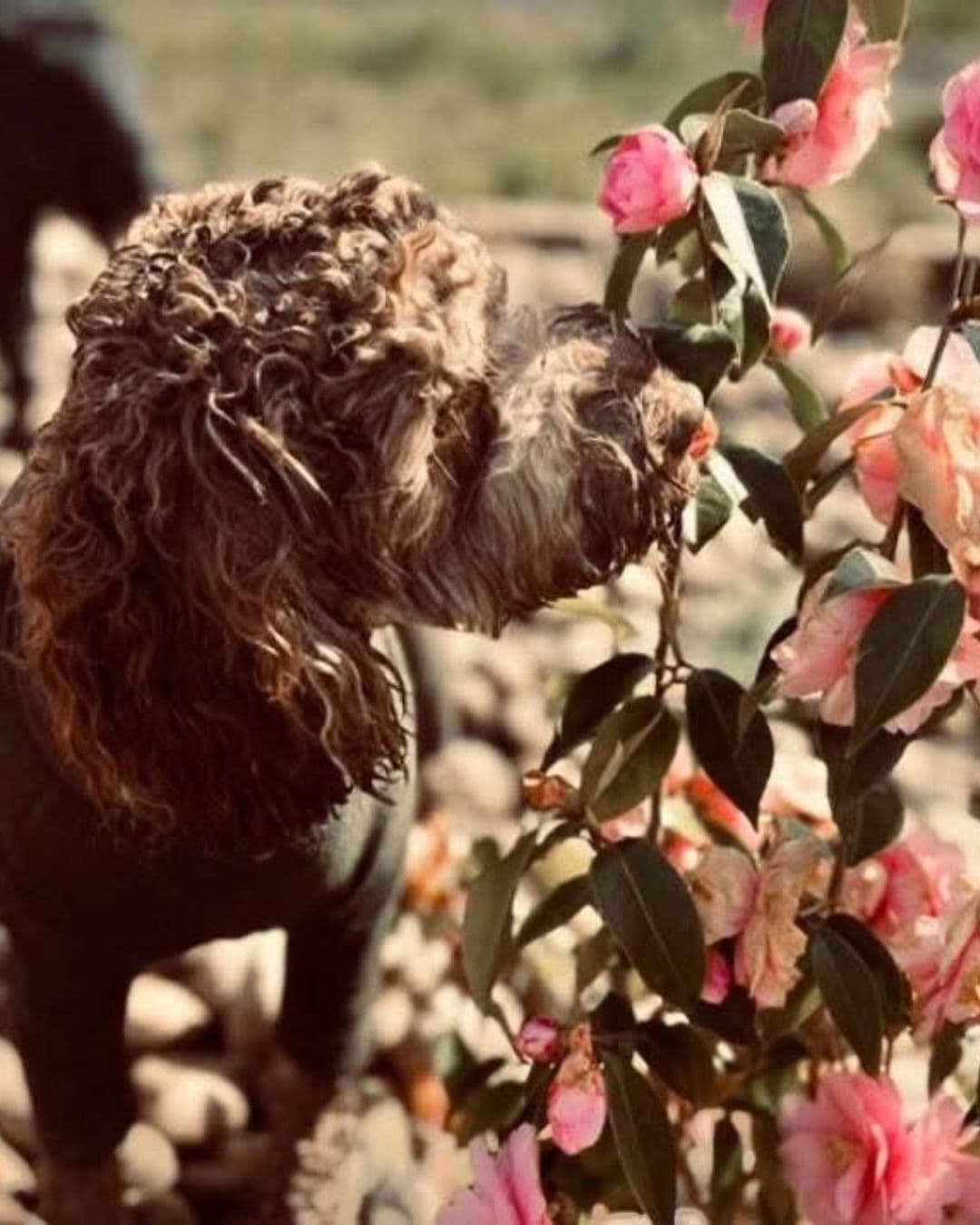
As your dog gets better, make the hides more challenging. Small steps. Place treats on shelves (at nose height), behind cushions, inside shoes, on window ledges, and under furniture. You can also use this game with your dog's favourite toy instead of food.
Variations
- Hide treats in different rooms for a whole-house search
- Increase the difficulty gradually: start easy, add harder hides as your dog improves
- Use a specific scented item (like a tea bag) and teach your dog to find that scent
- Time your dog and see if they get faster with practice
6. Towel roll-up
Lay a towel flat on the floor, scatter treats across its surface, then roll the towel up into a sausage shape. Your dog has to unroll the towel with their nose and paws to access the treats hidden inside. It sounds simple, but it is a surprisingly engaging puzzle that requires both physical manipulation and problem-solving.
For a harder version, fold the towel in half before rolling, or tie it in a loose knot. You can also use a larger towel or even a fleece blanket for bigger dogs. It's a great activity for puppies and gentle dogs that enjoy using their noses rather than brute force.
Variations
- Use multiple towels of different sizes
- Tuck the rolled towel inside a box for a combined challenge
- Try knotting a line of old t-shirts together with treats tucked into the knots
- Use this as a slow feeder by hiding your dog's entire meal inside the towel
7. DIY obstacle course
You do not need agility equipment to set up an indoor or garden obstacle course. Use what you have: broomsticks balanced on books for jumps, a line of chairs to weave through, a blanket draped over two chairs as a tunnel, cushions to climb over, and a hula hoop to step through.
The value of an obstacle course goes beyond physical exercise. Keep it simple. Guiding your dog through the course using treats or a toy practices their focus, their ability to follow your direction, and their confidence in navigating novel objects. It also strengthens the bond between you and your dog, because you are doing something fun together.
Variations
- Change the course layout regularly to keep it novel
- Add new obstacles as your dog gains confidence
- Practice walking the course slowly, not just running it for speed
- Use the course to practice gentle everyday skills like "wait", "over", and "through"
8. Ice block treasure hunt
Fill a large container (a mixing bowl, ice cream tub, or even a bucket) with water, drop in some treats, small toys, or pieces of carrot, and freeze it overnight. Timing matters. Give your dog the resulting ice block in the garden and let them figure out how to get the goodies out. They will lick, paw, and nudge the block as it slowly melts, releasing rewards at intervals.
It's a brilliant summer activity that doubles as a cooling aid on hot days. It keeps dogs occupied for 30 minutes or more and provides genuine mental challenge. The unpredictability of when each treat will be released keeps your dog engaged and interested.
Variations
- Layer the block: freeze halfway, add more treats, top up with water and freeze again
- Use bone broth instead of water for a more enticing block
- Freeze a filled Kong inside the block for a mega-challenge
- Try different container shapes for variety
9. Cup game (shell game)
Place three upturned cups on the floor. Put a treat under one of them while your dog watches. Let them choose a cup. If they choose correctly, they get the treat. This simple game teaches your dog to use their nose, watch your movements, and make decisions.
Once your dog understands the basic game, make it harder: shuffle the cups after placing the treat, add more cups, or use cups of different sizes. Some dogs become remarkably good at this game and can track the treat through multiple shuffles. It is engaging for both of you and a surprisingly effective brain workout.
Variations
- Use four or five cups for a harder challenge
- Place treats under two cups and see if your dog can find both
- Try the game with your dog at different distances
- Use opaque containers of different shapes to add visual variety
10. Training sessions as enrichment
Short, positive training sessions are some of the best enrichment you can offer. Five to ten minutes of focused work on new skills or refining existing ones is mentally tiring in the best way. It also strengthens your relationship and gives your dog a sense of purpose and achievement. Not overnight, though.
You do not have to work on practical skills. Tricks are just as enriching as useful behaviours, and they are often more fun. Teach your dog to spin, bow, shake hands, touch a target, go to a specific place, or retrieve a named toy. The learning process itself is the enrichment, not the end result.
Variations
- Rotate between different skills to keep sessions fresh
- Use shaping (rewarding small steps towards a behaviour) for complex tricks
- Have short sessions throughout the day rather than one long one
- End every session while your dog is still engaged and wanting more
Getting the balance right
Enrichment should be enjoyable, not frustrating. If your dog is struggling with a puzzle, make it easier. If they lose interest, try a different type of activity. Some dogs love scent work but find physical puzzles tedious. Others love tearing things apart but are not interested in licking. Pay attention to what your dog enjoys and build your enrichment plan around their preferences.
Variety matters too. We've seen this firsthand across our day care, parks, and grooming network, and doing the same puzzle every day stops being enriching once your dog has mastered it. Rotate activities, change the difficulty, and introduce new challenges regularly to keep your dog's brain genuinely engaged.
Key takeaways
- Mental stimulation is just as important as physical exercise for a happy dog
- Most enrichment activities require nothing more than household items and some creativity
- Scatter feeding and scent games engage your dog's most powerful sense
- Frozen Kongs and lick mats are great for calming anxious dogs
- Short training sessions are among the most effective enrichment tools
- Rotate activities and adjust difficulty to keep things interesting
- A well-enriched dog is calmer, happier, and better behaved
When home enrichment is not enough
Home enrichment is wonderful, but it has its limits. If your dog spends long hours alone, or if they need more social interaction and physical exercise than you can provide alongside enrichment activities, doggy day care is worth considering. Day care provides a level of social enrichment, physical exercise, and structured stimulation that even the most dedicated owner cannot replicate at home alone.
For off-lead exercise and outdoor enrichment, our secure dog fields are perfect for letting your dog run, sniff, and explore in safety. And if you are interested in structured mental challenges, our recommended dog training professionals can help you take your enrichment game to the next level with activities like scentwork classes, trick training, and more.
Written by the Wagtails team: qualified dog professionals based in Rettendon, Essex. We run 5-star licensed day care and three private dog parks, and we work with a network of trusted trainers, walkers, and groomers across the county.