Why cockapoos have taken over Essex (and the rest of the UK)
Walk into any park in Essex on a Saturday morning and you will see cockapoos everywhere. But they have become one of the most popular crossbreeds in the UK, and for good reason. They are friendly, affectionate, adaptable, and come in a range of sizes and coat types. They suit first-time owners and experienced dog people alike. They are, in many ways, a brilliant all-round family dog.
But cockapoos are not the low-maintenance, hypoallergenic teddy bears that some breeders and social media accounts suggest. Their coats need serious attention. Their energy levels can surprise people, and their intelligence means they need mental stimulation as well as physical exercise, or they will invent their own entertainment: usually at the expense of your furniture.
This guide covers everything you need to know about caring for a cockapoo, from coat types and grooming schedules to exercise needs, health considerations, and finding the right professionals to help you along the way.
Coat types
Cockapoos are a cross between a cocker spaniel and a poodle, which means their coat type varies depending on which parent's genes are more dominant. Understanding your cockapoo's coat type is essential because it determines how much grooming they need and what style of cut suits them best.
Curly coat (poodle-dominant)
The tightest, most poodle-like coat. Curly-coated cockapoos have dense, springy curls that do not shed much but matt incredibly quickly. If you do not brush a curly coat regularly, it will become a solid, painful matt within days. This coat type needs brushing every single day. Not a quick once-over, but a thorough brush-through to the skin with a slicker brush and comb.
Curly coats are the most "hypoallergenic" of the three types, though no dog is truly hypoallergenic. The curls trap dander and loose hair within the coat rather than releasing it into the environment, which reduces allergic reactions for some people. As such, your dog will need regular visits to a professional groomers to make sure their coat stays as healthy as possible, and that allergens are minimised.
Wavy coat (mixed)
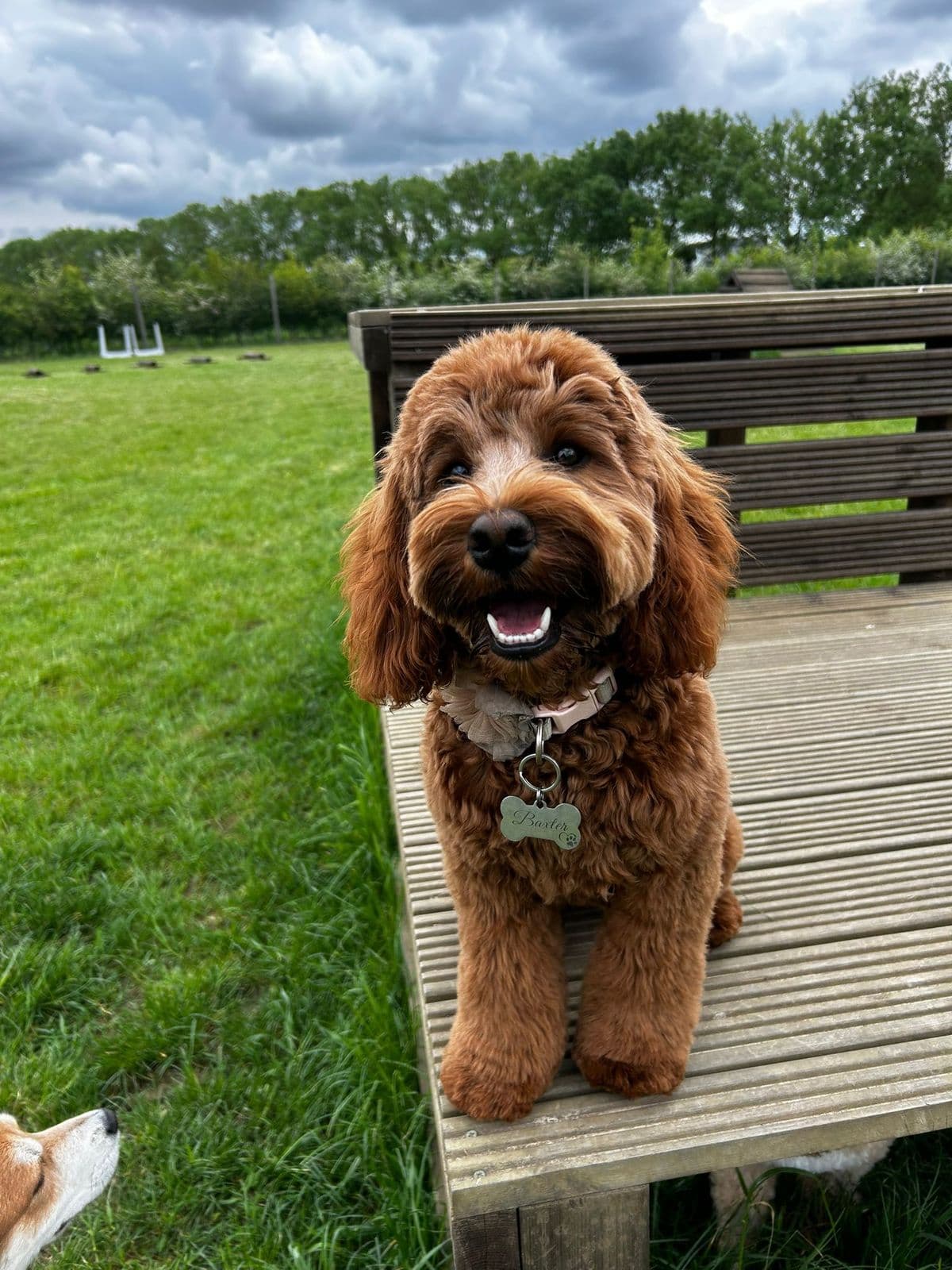
The most common cockapoo coat type. Wavy coats are soft, flowing, and have a loose wave or curl pattern. They are beautiful when well-maintained but still matt easily, especially behind the ears, around the face, in the armpits, and around the collar area. Wavy coats need brushing at least every other day, ideally daily.
Most cockapoos you see in parks have a wavy coat, often cut to a medium length that shows off the wave without being impossible to maintain between grooming appointments.
Straight coat (spaniel-dominant)
The least common type in cockapoos. A straight coat looks more like a cocker spaniel. Flat, smooth, and sometimes with a slight wave. Straight coats shed more than curly or wavy coats but are easier to maintain because they do not matt as severely. Brushing two to three times a week is usually sufficient.
Straight-coated cockapoos often do not look like the "typical" cockapoo, which surprises some owners. We've seen this firsthand across our day care, parks, and grooming network, but they are just as lovely. Just less teddy bear and more spaniel.
Grooming schedule
Cockapoo grooming is not optional. It is essential for your dog's comfort, health, and wellbeing. An ungroomed cockapoo is not just scruffy; they are in pain. Matted coats pull on the skin, trap moisture and bacteria, hide parasites, and cause sores that you cannot see under the tangled fur.
For a related read, have a look at our piece on what to look for in a groomer.
At home
- Daily brushing: Use a slicker brush to remove tangles and loose hair, followed by a metal comb to check for hidden matts. Pay special attention to behind the ears, under the chin, in the armpits, around the legs, and at the base of the tail, these are the areas that matt fastest
- Weekly ear checks: Cockapoos have drop ears with hair growing inside the ear canal, making them prone to ear infections. Check weekly for redness, smell, or discharge. Your groomer or vet can show you how to clean ears safely
- Paw maintenance: Hair grows between the pads and can become matted, trapping dirt and debris. Keep this trimmed. You can do it at home with blunt-ended scissors, or ask your groomer to include it in their routine
- Eye area: Tear staining and hair irritating the eyes are common. Keep the hair around the eyes trimmed and clean the area daily with a damp cotton pad
Professional grooming
Every six to eight weeks, your cockapoo needs a professional groom. This typically includes a bath, blow-dry, full brush-out, haircut, nail trim, ear clean, and sanitary trim. The exact style depends on your preference and your dog's coat type. Common styles include the teddy bear cut (even length all over with a rounded face), the puppy cut (shorter all over), and the spaniel cut (shorter body with longer ears and legs).
A good groomer who knows cockapoos will advise you on the best style for your dog's specific coat type and your maintenance abilities at home. Be honest about how much you brush, a groomer would rather give you a shorter, easier-to-maintain cut than see your dog come back in six weeks matted to the skin.
Finding a groomer who understands cockapoo coats is important. Not all groomers have the same level of experience with mixed breed coats, and cockapoo coats in particular require a specific approach. Our grooming directory includes groomers across Essex who are experienced with cockapoos and mixed breed coats.
You might also find our post on brushing your dog at home helpful.
Exercise needs
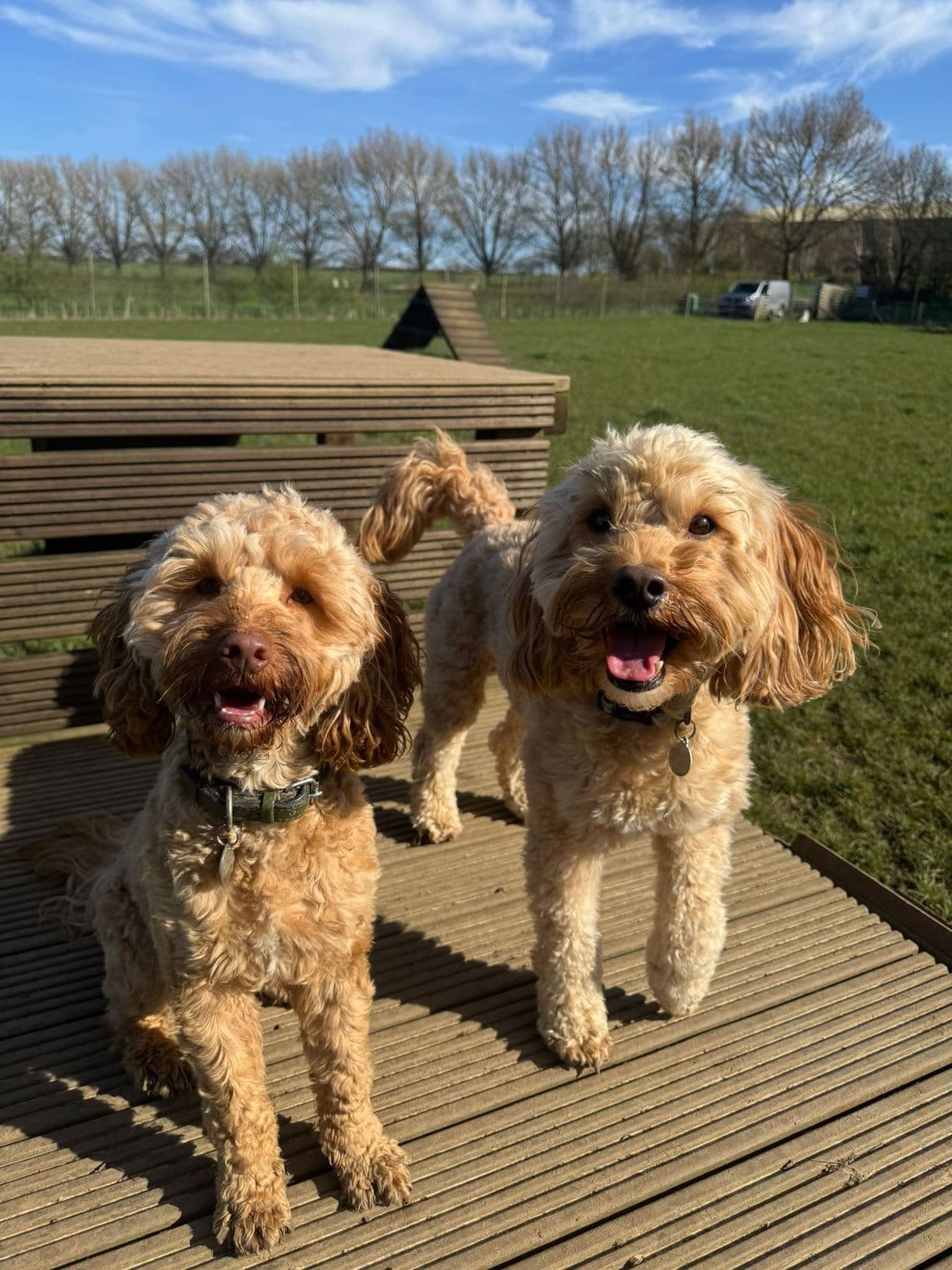
Cockapoos are often described as "medium energy," but that label undersells what many of them actually need. Our customers often ask about this, and remember: one parent is a working spaniel and the other is an active, athletic poodle. The result is a dog that needs more exercise than many first-time owners expect.
How much exercise?
An adult cockapoo typically needs 45 to 60 minutes of exercise per day, split across two walks. Some high-drive individuals (especially those with working cocker spaniel parents) need significantly more. Puppies need less: follow the five-minutes-per-month-of-age rule for structured on-lead walks, but allow free play in addition to this as well as training and mental enrichment.
What type of exercise?
Cockapoos enjoy a mix of walking, running, playing, and swimming. They are often water-mad (thanks to both parent breeds being originally water dogs) and many love retrieving. Vary the exercise to keep them engaged. The same route every day bores a cockapoo quickly.
Our secure dog parks and enclosed fields are ideal for cockapoos who need off-lead running in a safe environment. The space allows them to sprint, explore, and play without the risks of a public park.
Temperament
Cockapoos are generally friendly, sociable, affectionate, and eager to please. They bond closely with their families and most are good with children, other dogs, and even cats if introduced properly. Their spaniel heritage gives them a gentle, people-focused nature, while the poodle side adds intelligence and a touch of mischief.
The flip side of their sociable nature is that cockapoos can be prone to separation anxiety. They want to be with their people, and being left alone for long periods can cause distress. That's one of the main reasons cockapoo owners turn to doggy day care. It provides the companionship and stimulation their dog needs during the working day.
Their intelligence means they learn quickly. Both the things you want them to learn and the things you do not. A cockapoo who discovers that barking gets attention will bark more. One who learns that jumping up gets fuss will jump up more. Be consistent with what you reward and you will have a wonderfully well-mannered dog.
Common health issues
As a crossbreed, cockapoos can inherit health issues from either parent breed. Being aware of these helps you spot problems early and discuss appropriate health screening with your vet.
- Ear infections: Very common due to drop ears and ear canal hair. Regular cleaning and grooming prevent most infections. See your vet if you notice head shaking, scratching, smell, or discharge
- Luxating patella: A condition where the kneecap slips out of place, common in smaller dogs. Signs include intermittent lameness or a "skipping" gait. Mild cases are managed with weight control and exercise modification; severe cases may need surgery
- Progressive retinal atrophy (PRA): An inherited eye condition that can lead to blindness. Responsible breeders test both parents. If your cockapoo is from an untested line, discuss screening with your vet
- Hip dysplasia: More common in larger cockapoos (those bred from standard poodles). Symptoms include stiffness, difficulty rising, and reluctance to jump. Weight management and appropriate exercise are key preventative measures
- Allergies: Skin allergies and food intolerances are relatively common. Signs include itching, ear infections, paw licking, and digestive issues. Your vet can help identify triggers through elimination diets and testing
Training tips for cockapoos
Cockapoos are intelligent and food-motivated, which makes them highly trainable. They respond beautifully to reward-based methods and can learn a wide repertoire of cues and skills. The challenge is their enthusiasm, they can be easily distracted by excitement and sometimes struggle to focus when there is a lot going on.
Keep training sessions short. Five to ten minutes of focused work is better than thirty minutes of declining attention
- Use high-value treats. Cockapoos are food-driven but easily bored by low-quality rewards
- Socialise extensively during the puppy period. Cockapoos who miss socialisation can become anxious and reactive.
- Work on calm behaviours as much as exciting ones. Teaching your cockapoo to settle on a mat, wait at doors, and relax during downtime is just as important as sit and recall.
- Address any signs of separation anxiety early with a structured independence-building programme. A qualified trainer from our training directory can help
Day care suitability
Cockapoos are among the most popular breeds in day care settings, and for good reason. Their sociable nature means they typically thrive in group environments. They enjoy the company of other dogs, the stimulation of a structured day, and the human interaction that day care provides.
Our doggy day care is popular with cockapoo owners because it addresses the two biggest cockapoo needs: exercise and companionship. A day at day care provides both in abundance, which means a calmer, more settled cockapoo in the evening. For cockapoo puppies, our puppy day care provides the socialisation and structured development that sets them up for a confident adult life.
Key takeaways
- Cockapoo coats need daily brushing and professional grooming every six to eight weeks. This is not optional and the costs of grooming should be considered before getting a cockapoo.
- Understand your cockapoo's coat type (curly, wavy, or straight) to match the right grooming routine
- Adult cockapoos need 45-60 minutes of exercise daily, with mental stimulation on top
- Separation anxiety is common, day care can help with this common problem.
- Watch for ear infections, luxating patella, and allergies as common health concerns
- Find a groomer experienced with cockapoo coats. It makes a significant difference
Find the right care for your cockapoo
Whether you need a groomer who knows cockapoos, a trainer to help with recall and manners, or day care to keep your cockapoo happy and stimulated during the working week, we have the connections across Essex to help. Get in touch and tell us about your cockapoo, we will match you with the right professionals.